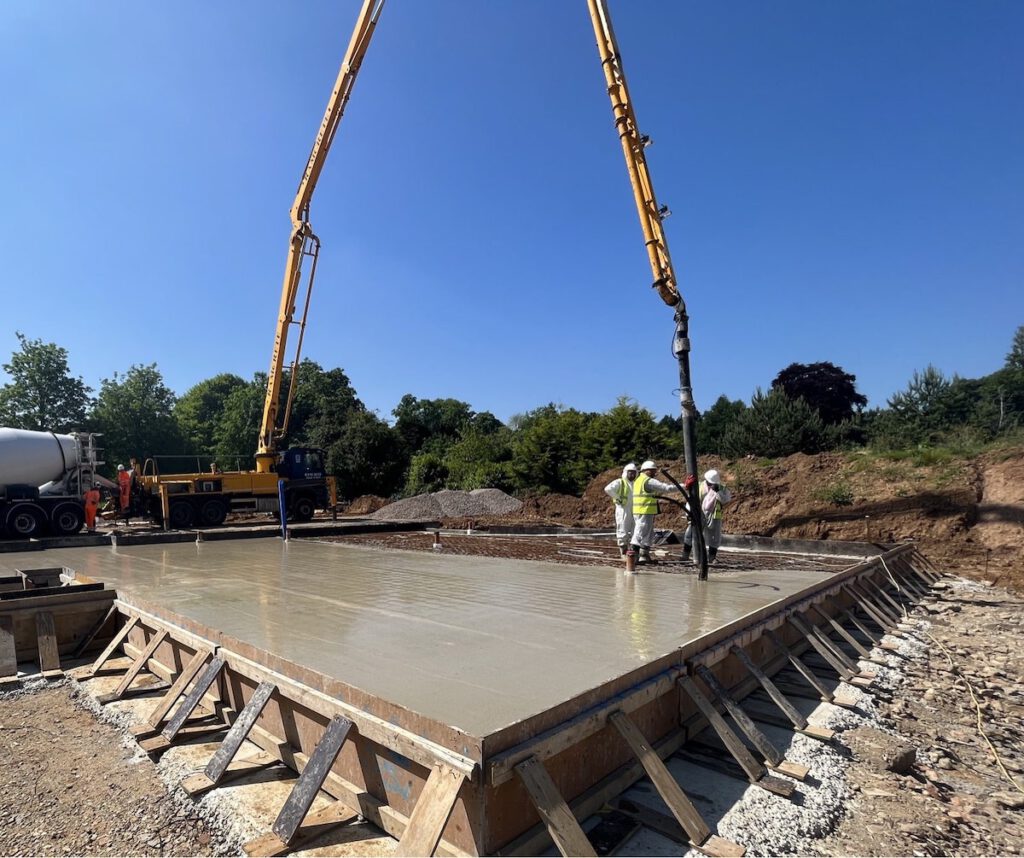
Following a detailed geotechnical review, SPEEDECK identified that shallow foundations were not suitable due to the depth and variability of the soft upper soils. A CFA piled raft foundation was therefore proposed as the most efficient solution, integrating both piling and slab within a single substructure package. This approach eliminated deep excavation requirements and avoided the stability risks associated with traditional foundations, offering the client a reliable and streamlined delivery path.


Concept Design


Design Engineering
The site’s ground conditions comprised Made Ground and Topsoil overlying Head Deposits, which in turn sit above the London Clay Formation and Lambeth Group. The upper layers of the Head Deposits were soft sand with intermittent soft clay, making them highly variable and unsuitable for shallow foundations. Reaching a competent soil layer would require excavation of at least 3 meters, approximately 1.7 meters to clear the Made Ground and a further meter to extend beyond the soft Head Deposits, rendering conventional shallow foundations both uneconomic and potentially prone to total and differential settlement beyond tolerable limits.
To address these challenges, a CFA piled raft solution was implemented. This approach combined reinforced concrete raft slabs, 225 mm and 300 mm thick according to structural loading variations, with 300 mm diameter CFA piles designed to Eurocode and warranty standards. Pile lengths ranged from 7.0 m to 12.0 m, achieving a maximum safe working load of 280 kN, while the total raft slab area of 1,397 m² created a unified and durable substructure. The system delivered long-term structural integrity without the need for heave protection, reflecting the non-plastic nature of the soils, and provided an efficient, material-conscious foundation solution that balanced cost, programme, and performance.


Construction
SPEEDECK completed the piling and raft construction as a single coordinated scope of substructure works with an eight week construction programme. This integrated approach reduced the need for multiple trade interfaces, simplified sequencing for drainage and services, and ensured early release of plots for follow-on construction. Delivery efficiency was further enhanced through offsite reinforcement preparation and standardised detailing, reducing on-site time and variability.