Updated November 2026
Chalk underlies much of southern and eastern England, from the Chilterns in Bedfordshire, Hertfordshire and Buckinghamshire to the North and South Downs. It can hide dissolution features, weak weathered zones and, in valleys, groundwater close to the surface. Most chalk sites can be built on safely once these risks are investigated properly. Where they are present, a piled raft is often the most adaptable foundation: piles can be positioned and lengthened to suit the ground, and extra piles can be added if a void is found during piling. This guide explains the risks, how to investigate them and how SPEEDECK designs foundations for chalk, with examples from Hertfordshire and Hampshire.
Risks Associated with Dissolution Features in Chalk

Diagram of chalk dissolution features beneath a building
The dissolution features found in chalk may pose a range of risks that can lead to severe damage to properties and infrastructure, particularly for the foundations of buildings. Even minor issues can still cause problems and be expensive to address, such as damage to services, facades, and renders.
Some areas are more susceptible to these risks than others, and managing these risks requires careful consideration and geotechnical engineering expertise to assess the potential impact on any structures affected.
Open Voids

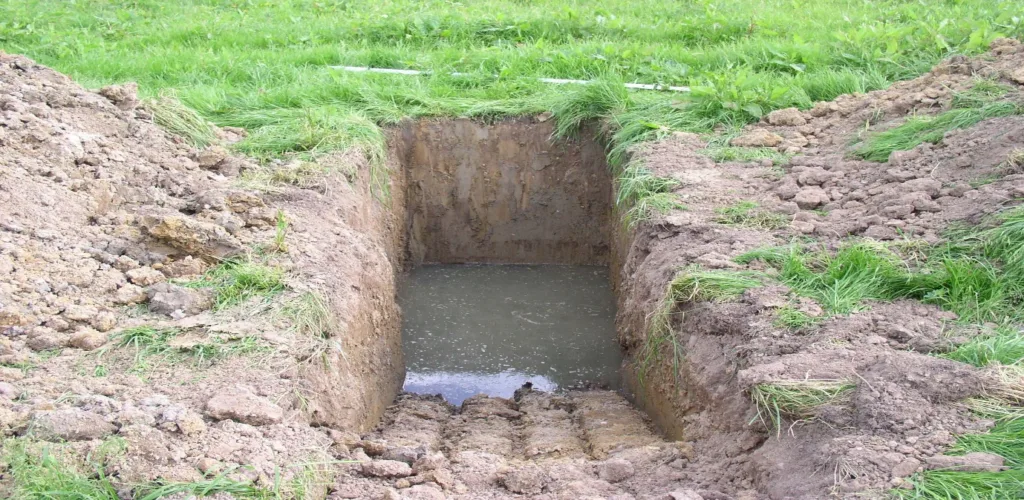
Open void in chalk
The thought of open voids underneath a structure can be unsettling, as the potential risks are concerning. These voids may create spaces within the geological structure that can compromise the stability of anything above them. Open voids can also cause issues with forming pile bores during construction, compromising safety and structural integrity whilst increasing costs and causing delays.
Detecting these voids can be a challenge, but with the advancement of technology, methods like geophysical surveys and penetration testing can verify their existence and location.
Ultimately, addressing open voids might involve filling them or designing foundations that bypass them. It’s essential to take measures to mitigate these risks as open voids can lead to disastrous collapses or difficulties in building foundations.
Infilled Features
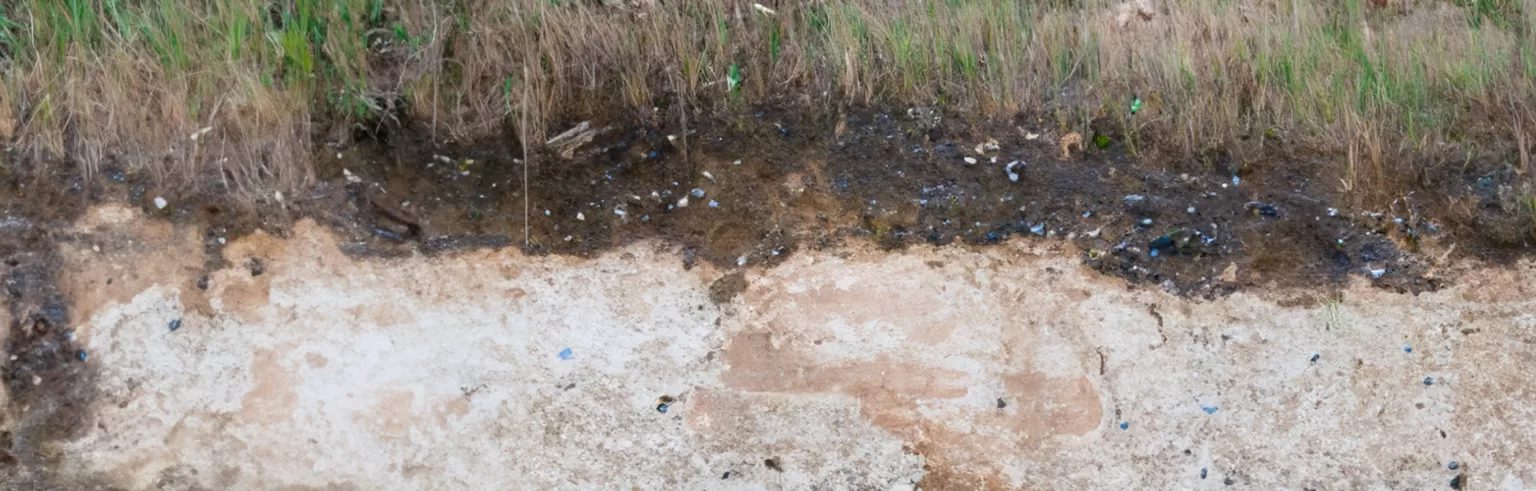
Another potential challenge when building structures on chalk is the presence of infilled features, formed when voids or cavities collapse or become filled with sediment over time.
Infilled features can cause variations in the depth of the chalk, which can affect the capacity of the foundation. They can also represent soft spots in the ground, where the infill deposits have much lower strength than the surrounding chalk. This can result in irregular settling or movement of structures, potentially leading to structural damage.
To address this issue, designers can modify foundations to deal with the variability in the chalk depth or potentially remove the infill and replace it with a more stable material. By detecting and properly addressing infilled features, builders can ensure the safety and stability of structures on chalk foundations.
What Makes an Area Prone to Chalk Dissolution?
Chalk dissolution is largely influenced by environmental and geologic conditions, the main published methods for predicting this risk are thanks to work by Clive Edmunds (2001). Some factors that might make an area more prone to these features of chalk dissolution include:
- Rainfall and Weather: In areas with more rainfall, the water can infiltrate into the ground and interact with the chalk, leading to dissolution. Additionally, freeze-thaw cycles can also contribute to chalk dissolution.
- Soil Characteristics: The permeability and porosity of the soil can influence how water interacts with the underlying chalk. Highly permeable soils allow more water to reach the chalk, potentially leading to more dissolution.
- Underground Water Flow: The presence of underground streams or rivers can accelerate chalk dissolution by constantly bringing in fresh, slightly acidic water.
- Human Activities: Human activities, such as mining or construction, can accelerate chalk dissolution by disturbing the natural equilibrium of the environment and increasing the exposure of chalk to water.
Conversely, areas that have less permeable soils or thick protective cover by Paleogene deposits, and less human activity may be less prone to chalk dissolution features. Our project at Loder Close demonstrates these ground challenges.
Ground Investigation Methods for Identifying the Risks with Chalk Dissolution
Ground investigation for chalk dissolution
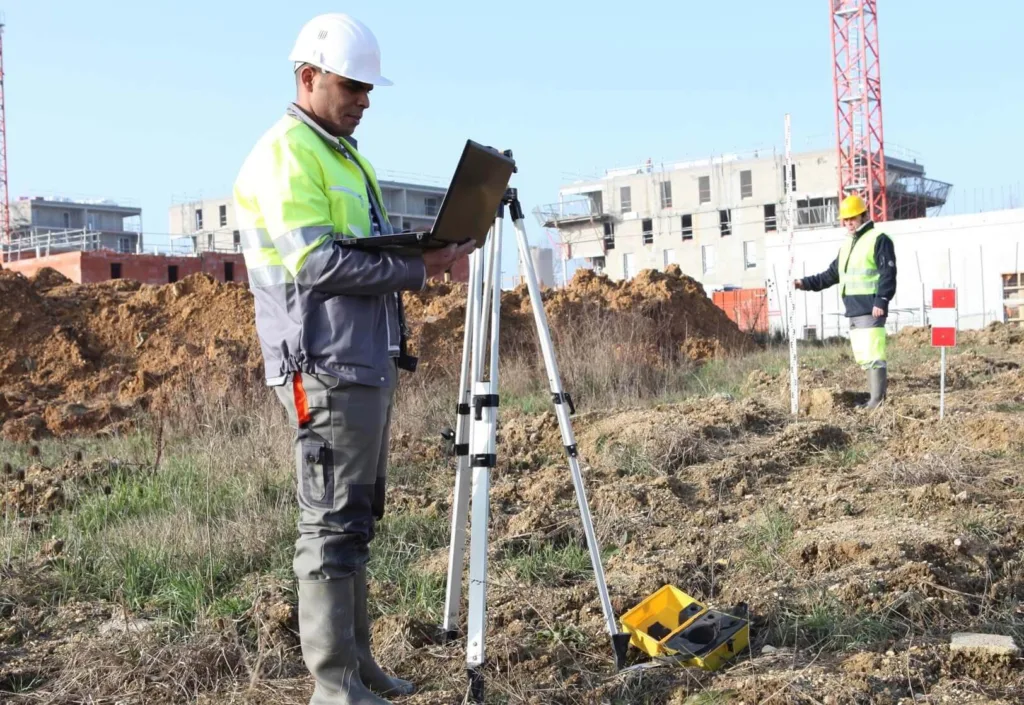
The initial identification of associated risks is crucial to navigating the complexities of chalk dissolution, which involves various techniques to understand the subsurface conditions.
Preliminary steps can include desk studies, site visits and non-intrusive ground testing. These direct the course of the ground investigation, shaping the selection of appropriate testing methods, the formulation of mitigation strategies, and the overall foundation scheme execution. We undertook these tests at our Crossways project in Oxfordshire.
While specific methods of investigation might vary based on local geological conditions, common methods include: Geophysical Surveys, Cone Penetration Testing (CPT), Dynamic Probing, Borehole Drilling, Gamma Logging, Ground Penetrating Radar (GPR) or Laboratory Testing.
Before choosing a method, it’s essential to seek advice from geotechnical engineers or consultants, as the most effective investigation method can vary based on the local geology and specific project requirements. By conducting detailed investigations and analyses, experts can identify any potential issues or risks that could affect the foundation’s stability and offer solutions to mitigate them.
Keep in mind that this process should be iterative. As fresh data surfaces, the risk level should be reevaluated. See how we assessed dissolution risk in weak, structureless chalk at Netherhampton Road.
Mitigation Strategies for Foundation Design Where Chalk Dissolution is a Feature
Building a foundation in an area where chalk dissolution is prevalent can lead to unpredictable soil behaviour, making it essential to implement effective mitigation strategies during the design phase.
Reinforced Strip Foundations
Using reinforced deep strip foundations allows foundations to cover minor dissolution features, spanning these areas without compromising structural integrity. However, this approach may not address larger features, which could pose a risk without appropriate intervention.
While a Reinforced Strip Foundations method can offer protection, it can also be extremely expensive, particularly when used across a large development without careful targeting.
Engineered solutions can offer a more nuanced and cost-effective approach without compromising on safety or build-ability, and the potential shortfalls of reinforced deep strip foundations call for careful consideration and additional investigation to ensure larger features are properly identified and managed.
Piled or Piled Raft Foundations

SPEEDECK’s piled foundations
When it comes to building on soft ground or variable soil depths, piled or piled raft foundations are designed to mitigate the risks that come with such conditions. They do this by transferring the load of the structure to the piles.
Piled foundations involve driving or boring long columns deep into the ground, transferring building loads to greater depths. These are traditionally used with ground beams in housebuilding. A piled raft – essentially a combination of a traditional raft foundation and piles – spreads the load across a wider area for added stability.
However, as with any geotechnical solution, its success relies heavily on a thorough and detailed ground investigation. In the case of chalk, which may have weak zones at depth, a ground investigation will determine the best course of action and only through a comprehensive understanding of the ground conditions can an optimal pile design and layout be achieved.
Mitigating Risks for Piled Foundations

SPEEDECK constructing piled foundations
When building piled foundations on unstable ground, especially in areas presenting a high-risk scenario, one trusted methodology for site testing is to probe the pile positions.
Tools of choice for this are often Dynamic Probing and Cone Penetration Testing (CPT). Each has its strengths and brings a unique perspective to our understanding of the site conditions.
Armed with these investigations’ insights, we can make informed decisions on the foundation scheme, carefully calibrating our designs to respond to the site’s unique geological profile. The efficiency and value we gain from this process rests heavily on the quality of these investigations.
Dynamic Probing
Dynamic Probing is a widely used technique in ground investigation, due to its speed and low cost. However, it’s important to acknowledge that this technique is not faultless, and those aware of the limitations of dynamic probing are often hesitant to rely on it exclusively.
Based on our experience, Dynamic Probing can have a tendency to exaggerate potential risks, which can ultimately affect the outcome of a project. Additionally, while Super Heavy Dynamic Probing has its advantages, there are still some situations where it falls short. It can only distinguish between hard and soft ground, and the force with which it is driven means the investigation of very soft ground is quite insensitive. Therefore, it may not be able to accurately differentiate between open voids, infilled voids and heavily weathered Chalk.
The method can be useful to identify zones of potential weakness, however since the method often exaggerates the risk, further investigative work is often found to be needed. It may be the case that alternative approaches while seeming initially more expensive, could save more money overall.
Cone Penetration Testing

Diagram displaying how Cone Penetration Testing (CPT) works
Cone Penetration Testing is a highly valuable technique that provides a detailed understanding of ground conditions by measuring the strength of the ground the cone is pushed into. Its increased sensitivity particularly in soft materials is much better suited to identifying the true nature of dissolution features.
With the addition of a Gamma Probe sensor, sensitivity is further enhanced. This probe detects the low levels of natural gamma radiation emitted from clays, allowing for a more precise distinction between soil overlying the chalk and the identification of any infilled features.
This precision is particularly useful in the pile design process. If a CPT is carried out at each plot, piles can be designed on an individual basis, considering the conditions of their specific location. This is even more valuable if the depth of chalk varies greatly across the site and can lead to a highly optimised and efficient foundation design. For smaller developments, this approach can often prove to be the most cost-effective method.
However, for larger developments, conducting CPTs at every pile location can be time-consuming and potentially prohibitive in terms of cost. In these scenarios, geophysical investigations come into play. These non-destructive methods are adept at determining the physical properties of soil and rock, often used in environmental and engineering studies to map and characterise the subsurface without extensive drilling or excavation.
By identifying areas where potential features may occur, these Geophysical Surveys help target where CPTs would be most beneficial in time and cost-effectiveness.
Electrical Resistivity Imaging
Electrical resistivity imaging is a cutting-edge technology used in geophysical surveys. It’s particularly useful in identifying dissolution features. Electrical resistivity imaging detects variations in moisture content.
These variations are used to infer the presence of potential chalk dissolution features on a site. By targeting these areas specifically, the developers can ensure that any testing or excavation is carried out only where it’s necessary. Overall, electrical resistivity imaging is an invaluable tool for surveying and identifying features in challenging geological settings.
Another useful geophysical survey method for detecting possible features is magnetometry, which detects small changes in ground density. Both methods are viable but electrical resistivity imaging is likely to be quicker, especially for larger sites.

Diagram of electrical resistivity image
SPEEDECK’s Expertise: Navigating Challenges with Cone Penetration Testing
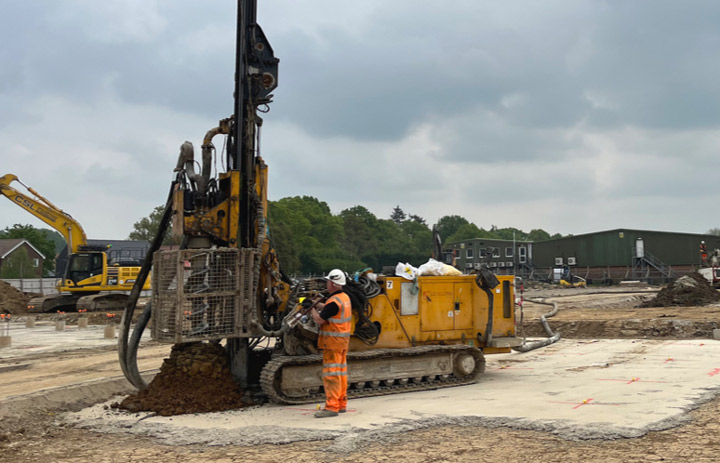
SPEEDECK on-site
A practical application of Cone Penetration Testing yielded illuminating results in a recent project undertaken by SPEEDECK, where Dynamic Probing initially suggested extensive dissolution features sprawling across significant parts of the site. These findings naturally provoked concerns and posed challenges for the planned construction work.
However, upon employing CPT, particularly enhanced with a Gamma Probe sensor, targeting the suspected feature areas, the assumed issues were not as severe as originally anticipated. The suspect areas, thought to contain open voids, were ultimately confirmed as zones of highly softened chalk or voids that had been infilled with soft silt.
In this case, the adoption of CPT provided much-needed confidence in our understanding of the ground conditions. This clarity was pivotal in shaping a successful piling operation and the construction work progressed efficiently, with no issues.
The instances where CPT transformed our comprehension of the ground conditions underline the value of this advanced technique in enhancing the safety and efficiency of our construction processes.
Chalk with High Groundwater
Chalk is a major aquifer, and on lower ground, near rivers and in chalk valleys, groundwater can sit within a metre or two of the surface. Flowing groundwater can also make dissolution more active. High groundwater adds three problems to a chalk site:
- Trenches and excavations below the water table can collapse or flood, and may need dewatering.
- Concrete placed in wet excavations is harder to control.
- Deep trench-fill or strip foundations designed to bridge dissolution features become slower and more expensive.
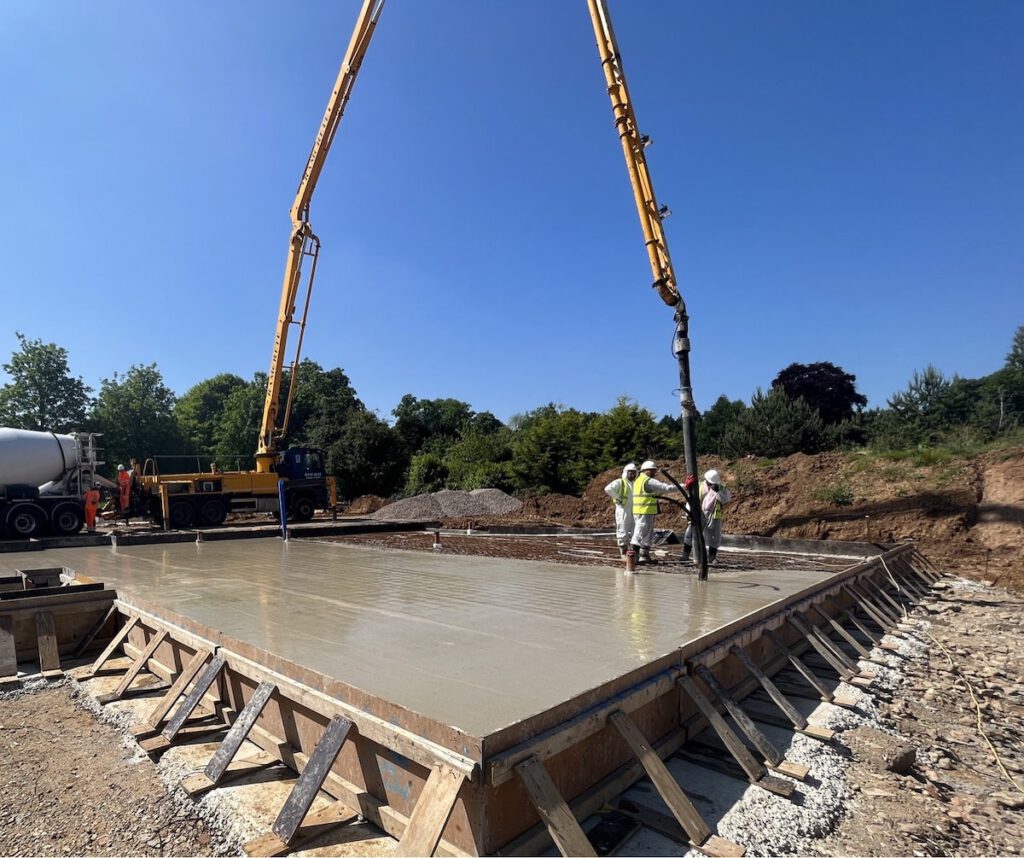
CFA (continuous flight auger) piling suits these sites, because concrete is pumped through the hollow auger as it is withdrawn, so the bore is supported without casing even below the water table. Combined with a raft at ground level, a piled raft keeps excavation above the groundwater, avoiding dewatering. Working from a concrete working platform rather than a granular piling mat also reduces the excavation and imported material on wet sites.
At Watercress Beds, Longparish in Hampshire, groundwater was found 0.7 m below ground, with chalk at about 2 m and potential dissolution features. SPEEDECK designed CFA piled rafts of approximately 411 m², on 300 mm piles 8.0 m to 11.5 m long, delivered in a five-week programme without an engineered piling mat.
The SPEEDECK Piled Raft System: an efficient foundation solution for chalk
At the cutting edge of geotechnical solutions, the SPEEDECK Piled Raft System is a highly efficient solution for managing chalk dissolution risks. This advanced system is adeptly tailored to the unique challenges that variable ground conditions pose, demonstrating an impressive degree of flexibility and adaptability in the design of the foundation scheme.
One of the standout benefits of the SPEEDECK Piled Raft System is its versatility. The piles can be strategically placed anywhere beneath the raft, allowing for a tailored approach to pile depth and location to accommodate site-specific ground conditions. This flexibility permits the scheme to efficiently respond to the varying nature of chalk dissolution features, facilitating the most optimal load distribution.

The SPEEDECK Piled Raft System constructed
Moreover, the SPEEDECK Piled Raft System is designed with contingencies in mind. In the event of encountering unexpected voids during piling – a worst-case scenario in foundation construction – the system allows for the seamless addition of more piles to the raft. This flexibility to adapt on the fly eliminates the need for significant redesign or delays in the construction schedule.
The SPEEDECK Piled Raft System embodies a balance of design engineering and practical adaptability. It is a reliable solution that not only acknowledges the uncertainties inherent in ground conditions but embraces and adapts to them, delivering an efficient, effective means of managing the risks for these developments.
SPEEDECK Projects on Chalk
- Templars Green, Baldock, Hertfordshire: 31 piled rafts, approximately 2,516 m², for 42 homes on weak, structureless upper chalk. A dissolution feature recorded about 300 m away was assessed as low risk, and soil testing showed no heave protection was needed despite nearby trees.
- Watercress Beds, Longparish, Hampshire: CFA piled rafts of approximately 411 m² on chalk at about 2 m, with groundwater at 0.7 m and potential dissolution features, delivered in five weeks.
- Loder Close, Lenham, Kent: 53 homes, 3,187 m² of piled rafts, heave and dissolution risks, lightweight CFA rigs, heave protection only where needed, the warranty provider consulted on dissolution, 15 weeks.
- Crossways, Lower Shiplake, Oxfordshire: 7 homes on Seaford and Newhaven Chalk with infilled dissolution features. Cone penetration testing (CPT) mapped the features, and a ground-bearing raft on a reinforced granular mattress avoided piling. It took five weeks.
- Netherhampton Road, Salisbury, Wiltshire: 106 homes on weak, structureless Seaford Chalk, with a non-voided piled raft that saved 37% against the original pile and ground beam scheme. A heave report removed the voidformers. It ran 27 weeks over three visits.
- Morris South, Woolwich, London: 10 homes on variable Made Ground over chalk. The original design was unworkable, so SPEEDECK used several pile designs and saved around 30% against budget, within 10 weeks.
Acknowledging Site Specificity and Embracing Expertise
The presence of chalk, while noteworthy, does not necessarily mean that there is an inherently high risk of dissolution features. It’s the unique combination of various geological features and site history that defines the level of risk. Engaging specialists early on is crucial. Their expert advice can guide further site testing and ensure that all associated risks are minimised or avoided altogether.
Remember, the historical context of a site also plays a pivotal role. In many areas, chalk has been mined historically, leading to the presence of man-made voids within the chalk. While this introduces another layer of complexity to the challenge, it is a topic deserving of its own detailed discussion, and we will explore this in a separate article focusing on mining risks.
In summary, while chalk dissolution presents a considerable challenge in foundation design and construction, with the right blend of comprehensive site investigation, expert input, and innovative solutions like the SPEEDECK Piled Raft System, these risks can be effectively managed, paving the way for safe and successful construction projects.
Consider all the points discussed here and if you would like any more clarification, please do get in touch – our experts at SPEEDECK will be more than happy to provide informative advice tailored specifically to your needs.
FAQs
Can you build on chalk with dissolution features?
Yes. Most chalk sites can be built on once the dissolution risk is assessed. Low-risk sites may suit reinforced strip foundations, while higher-risk or variable sites are usually better on piled or piled raft foundations designed around the investigation results.
How do you find dissolution features before building?
A desk study and risk assessment come first, followed by targeted testing. Geophysical surveys such as electrical resistivity imaging can map suspect areas across a large site, and cone penetration testing with a gamma probe then checks them in detail. Dynamic probing is quick and cheap but can exaggerate the risk.
What is the best foundation for chalk with high groundwater?
Usually a CFA piled raft. CFA piles can be formed below the water table without casing, and the raft sits at ground level, so there is no deep excavation below the groundwater and no need for dewatering.
What happens if a void is found during piling?
With a piled raft, piles can be lengthened or extra piles added beneath the raft to bridge the feature, without redesigning the whole foundation or delaying the programme.
Do all chalk sites need piles?
No. Where the chalk is competent near the surface and the dissolution risk is low, reinforced strip foundations can work. Piles are needed where the upper chalk is weak, the risk of features is higher, or groundwater makes excavation difficult.