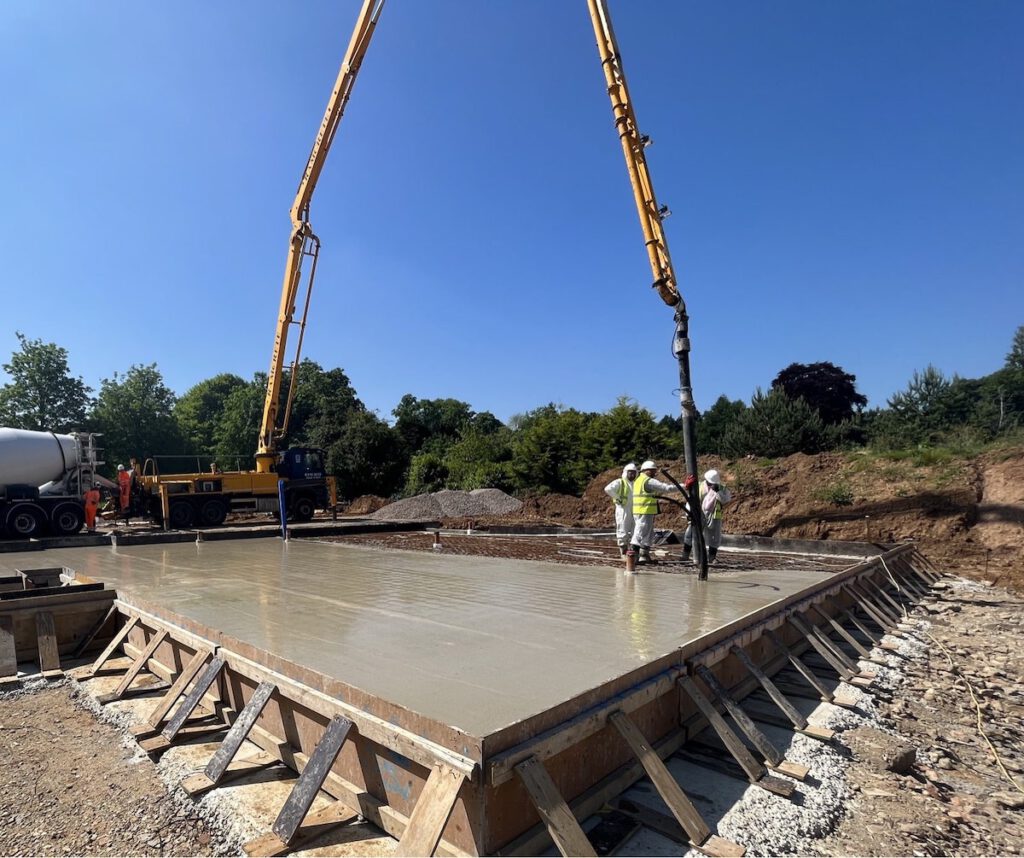

From 1 January 2026, all NHBC-registered homes starting foundations must comply with the NHBC Standards 2026. While the update does not introduce major new technical requirements for foundations, it includes several clarifications and refinements that reinforce existing expectations regarding investigation, design responsibility, and material suitability.
For developers, designers, and contractors, the key takeaway is consistency rather than change: foundations must continue to be properly justified, engineered where required, and supported by appropriate site information.
Ground Conditions Remain Central to Foundation Design
Chapter 4 of the Standards, which governs foundations, continues to emphasise the importance of understanding and verifying ground conditions before selecting a foundation solution. This is not a new position, but the updated guidance reinforces NHBC’s expectation that ground conditions are adequately investigated and clearly reflected in the foundation design.
For brownfield or remediated sites, this highlights the ongoing need for early collaboration between geotechnical engineers, foundation designers, and warranty providers to ensure that identified risks are appropriately addressed.
Seasonal Clay Movement: Clarification Rather Than Change
Updates to Chapter 4.3 (Strip and trench fill foundations) provide additional guidance on the seasonal behaviour of clay soils, particularly regarding moisture variations. However, the underlying requirements for shallow foundations remain unchanged, including minimum foundation depths.
The revised wording reflects established industry understanding rather than introducing new constraints. Designers are still expected to demonstrate that foundations are suitable for site-specific conditions, particularly where trees, historical vegetation, or variable moisture regimes are present, but the update does not represent a fundamental shift away from shallow foundation solutions where they are already appropriate.

Clay soil challenging ground conditions
Raft and Piled Foundations: Continued Focus on Engineered Solutions
Chapter 4.4 (Raft, pile, pier and beam foundations) does not introduce substantive technical changes, but it sits within a broader standards framework that continues to support engineered, performance-based foundation solutions where ground conditions fall outside simple prescriptive guidance.
NHBC’s position remains consistent: where foundations are not covered by standard details, they must be designed by suitably qualified engineers and supported by appropriate investigation, calculations, and inspection under Technical Requirement R5.
This reinforces the value of coordinated foundation design, particularly on sites with variable or complex ground conditions, where early engineering input can help reduce redesign risk and programme disruption.
Durability and Technical Requirement R3
Technical Requirement R3 continues to require structural elements, including foundations, to achieve a minimum 60-year design life. This requirement is not new.
The key update to R3 relates to the approval and assessment of proprietary systems, strengthening the evidence required to demonstrate durability and suitability. These changes do not affect traditional foundation construction methods or conventional reinforced concrete foundation systems when properly designed and specified.
Recovered Aggregates and Engineered Fill: Targeted Clarifications
The updated Standards also include clearer guidance on the use of recovered aggregates and engineered fill materials. In practical terms, this includes:
- Clarification that concrete in contact with PFA fill must be sulphate-resistant
- Confirmation that IBAA is not permitted as a fill material below ground-bearing slabs
These updates are specific and targeted, rather than a broad change to the foundation specification, but they do reinforce the need for designers to clearly identify ground chemistry and ensure material compatibility.

Concrete Blinding for foundations with SPEEDECK
What This Means in Practice
Overall, the NHBC Standards 2026 do not materially change foundation design rules. Instead, they reinforce existing expectations around evidence, coordination, and justification.
For developers and contractors, this continues to mean:
- Early and appropriate site investigation
- Clear interpretative reporting
- Timely engagement with foundation designers
- Careful assessment of any late design changes
Preparing your foundations for 2026
With the Standards applying to all foundations starting from January 2026, projects currently in planning or pre-construction should ensure their foundation strategies align with the clarified guidance.
By maintaining a well-coordinated, engineered approach to foundation design, supported by appropriate investigation and clear specification, project teams can move forward with confidence, while remaining fully compliant with NHBC requirements.
Our team works closely with developers, engineers, and warranty providers to deliver NHBC-aligned foundation solutions, from early ground assessment through to design, construction, and inspection.
If you’re planning a scheme for 2026 or beyond, speak to us early to ensure your foundation strategy is robust, efficient, and fully aligned with the latest NHBC guidance.