Getting foundations wrong doesn’t just cause problems below ground, it impacts your programme, costs, approvals, and long-term performance. Most issues don’t come from complex engineering. They come from early decisions, missed risks, or poor coordination. Here are the six most common foundation mistakes we see on UK developments, and how to avoid them.
Poor or Incomplete Ground Investigation
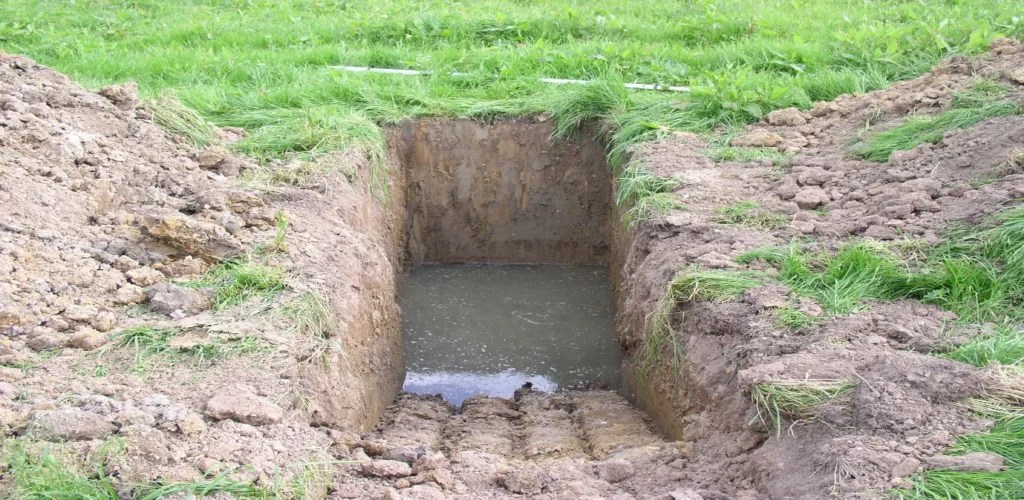
If your ground data is wrong, everything that follows is a guess. Too few boreholes, limited trial pits, or “standard” soil assumptions often lead to:
- Unexpected ground conditions
- Redesign mid-build
- Programme delays and extra cost
How to avoid it:
Invest in a site-specific ground investigation that reflects the size and variability of your project. Early collaboration between designers and ground investigation teams is key.

Using a “One-Size-Fits-All” Foundation Design
No two sites are the same, but foundation designs are often reused with minimal adjustment.
This leads to:
- Over-engineering (wasted cost)
- Underperformance (risk and failure)
How to avoid it:
Design foundations around actual ground conditions, loading, and site constraints, not past projects. Integrating geotechnical and structural input early avoids inefficient solutions.
Ignoring Ground Movement and Heave
Clay soils, tree influence, and moisture changes can cause significant movement, but are still underestimated.
The result:
- Cracking
- Distortion
- Long-term structural issues
How to avoid it:
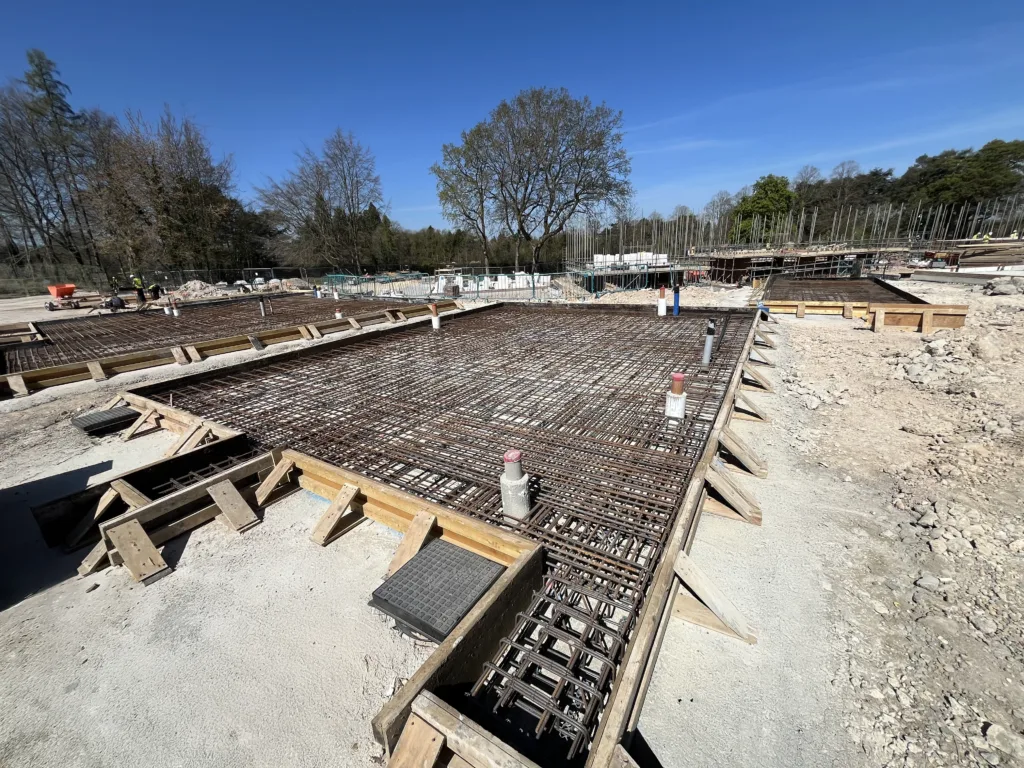
Identify shrink–swell potential early and design in heave protection measures, such as void formers or piled solutions where required.
We integrated heave protection into the project at Elsea Park, Bourne. By adding heave protection measures, we mitigated the effects of shrink-swell soils and maintained the structural integrity of each plot.

Overlooking Ground Gas and Contamination
Gas risks like methane, carbon dioxide, and VOCs are often missed, or considered too late.
This can lead to:
- Compliance issues
- Redesign
- Costly retrofitting
How to avoid it:
Carry out a detailed gas risk assessment early and incorporate protection (e.g. membranes, ventilation layers) into the foundation design from day one.
We added a gas membrane layer over at the later living development in Eastbourne, you can see the full build on our timelapse here.

Disconnect Between Design Disciplines
When geotechnical and structural engineers work in isolation, designs become:
- Overly conservative
- Misaligned with real site conditions
- Harder to build
How to avoid it:
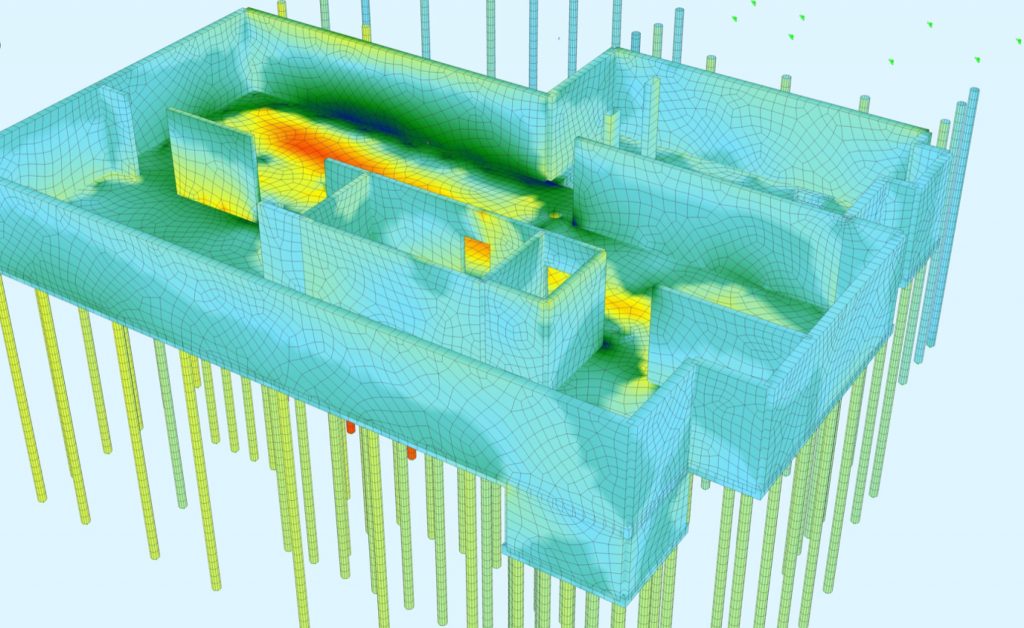
Adopt an integrated design approach from the outset. Coordinated teams produce solutions that are more efficient, buildable, and cost-effective.

Missing Warranty and Compliance Requirements
Even a technically sound design can fail if it doesn’t meet:
- NHBC / LABC requirements
- Eurocodes
- Warranty provider expectations
This often causes delays at approval stage.
How to avoid it:
Design for compliance from day one and engage with warranty providers early to avoid surprises later.
The Bottom Line
Most foundation issues aren’t unavoidable, they’re predictable.
The difference comes down to:
- Better early-stage data
- Joined-up design thinking
- Practical, buildable solutions
Get those right, and you reduce risk, protect programme, and avoid costly redesigns later.
FAQs About Foundation Mistakes
What is the most common foundation mistake?
Poor ground investigation. Without accurate site data, foundation design decisions are based on assumptions, increasing the risk of delays and redesign.
Why do foundation designs change during construction?
Unexpected ground conditions, missing data, or unsuitable initial designs often force changes mid-build, impacting cost and programme.
How can foundation costs be reduced?
By designing foundations specifically for the site conditions and avoiding over-engineering through integrated design.
When should ground investigation be carried out?
As early as possible, before foundation design begins, to reduce uncertainty and avoid costly changes later.