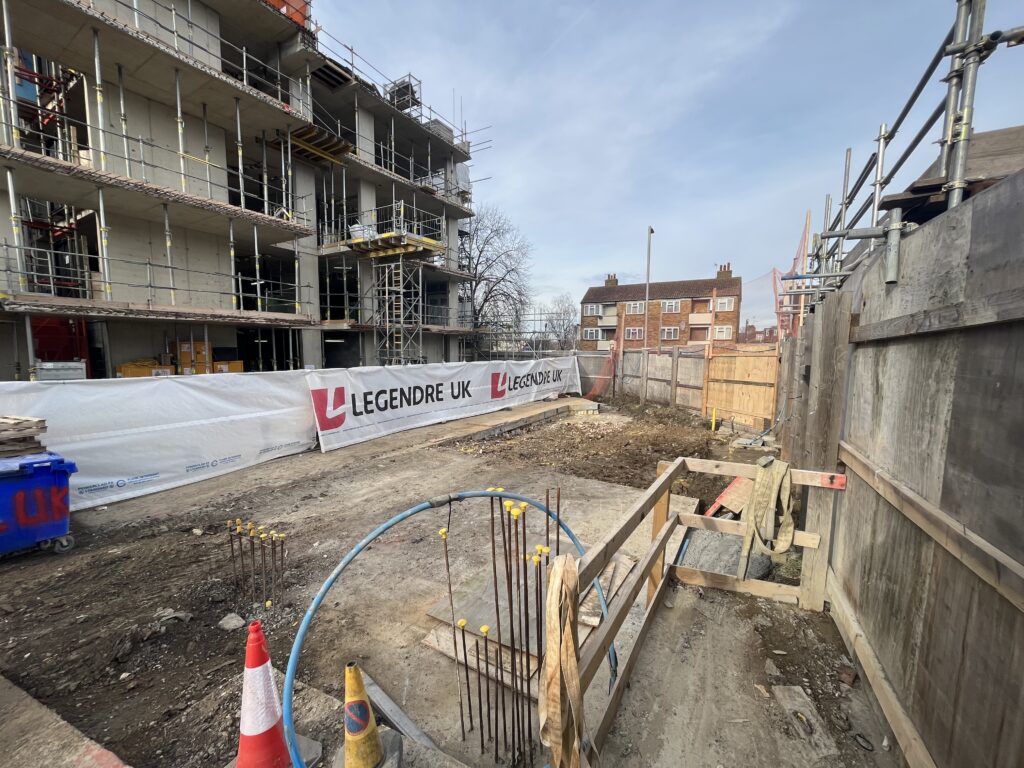
Urban development presents some of the most demanding foundation challenges in construction. Whether delivering affordable housing, apartment blocks or mixed-use developments, contractors and developers are often working within tight site boundaries, surrounded by existing buildings, live services and difficult ground conditions.
Unlike greenfield developments, urban sites frequently carry decades or even centuries of previous construction, demolition and redevelopment. As a result, every project requires a carefully considered foundation solution that balances structural performance, programme, cost and buildability.
Why Urban Sites Are More Challenging
Every city centre development is different, but many share similar constraints.
Common challenges include:
- Made Ground from previous developments
- Variable ground conditions across the site
- Existing foundations and buried structures
- Restricted working space
- Adjacent occupied buildings
- Existing utilities and drainage networks
- Party walls and neighbouring structures
- Noise and vibration restrictions
- Limited access for plant and deliveries
- Tight construction programmes
These factors often make traditional foundation solutions more difficult, more expensive or slower to construct.

Understanding the Ground Beneath Existing Developments
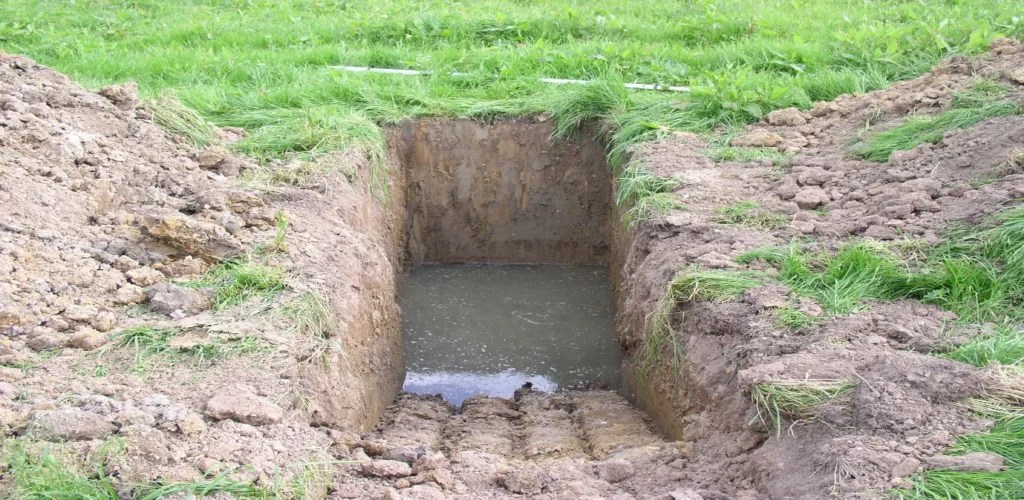
One of the biggest uncertainties on urban projects is what lies beneath the surface.
Historic developments may have left behind:
- Demolition rubble
- Old foundations
- Brickwork
- Concrete slabs
- Cellars
- Filled basements
- Buried services
- Variable fill material
This Made Ground can vary significantly across even a small site, meaning thorough geotechnical investigation is essential before any foundation design begins.
Why Piled Raft Foundations Work Well in Urban Developments
Urban development’s rarely have the luxury of space. Construction often takes place immediately alongside occupied homes, commercial premises, schools or public infrastructure.
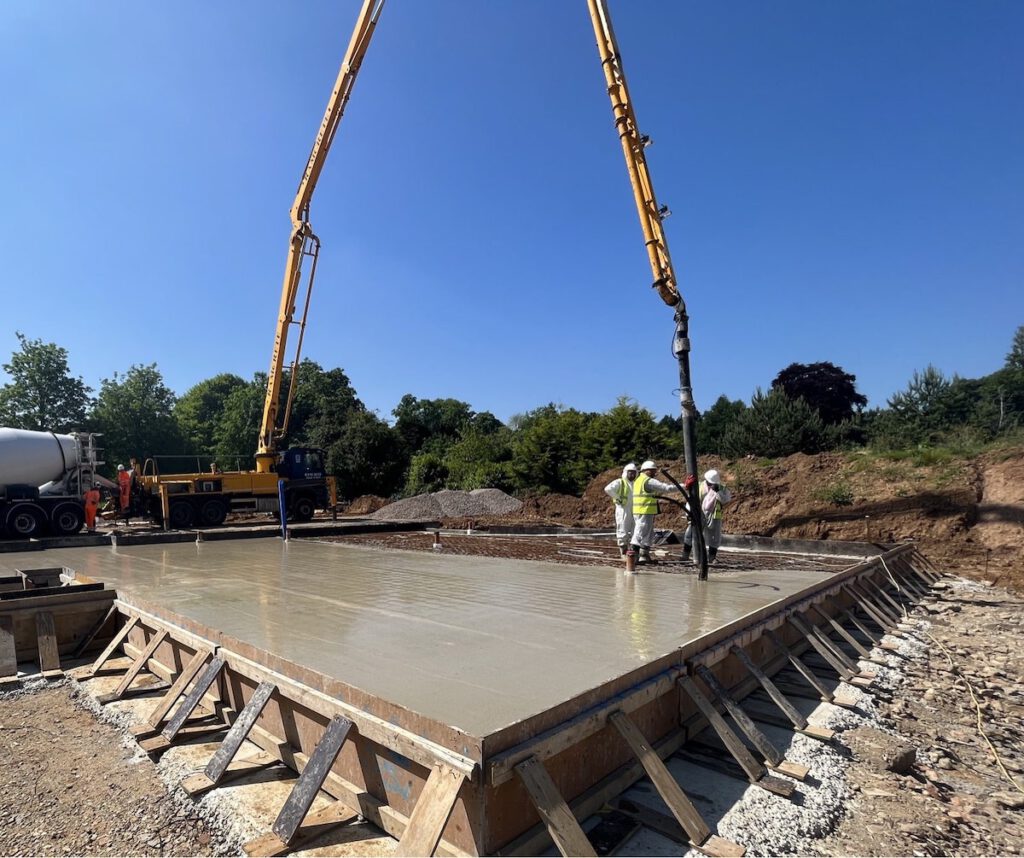
Our design approach considers not only the finished building but also how the foundations can be safely and efficiently constructed. A piled raft solution offers less excavation which means less construction traffic, fewer materials being imported in, reduced vibration and noise disturbance and less disruption to neighbouring properties.
Urban Challenges We’ve Helped Solve
Several of our London projects demonstrate how foundation design can overcome challenging urban constraints.
The site required construction of 90 residential units on a restricted urban site where access needed to remain available throughout the programme.
SPEEDECK developed a phased construction approach, minimised excavation through a shallow raft design and used lightweight CFA piling equipment to reduce piling platform requirements. The complete foundation package was delivered within programme despite the constrained working environment.
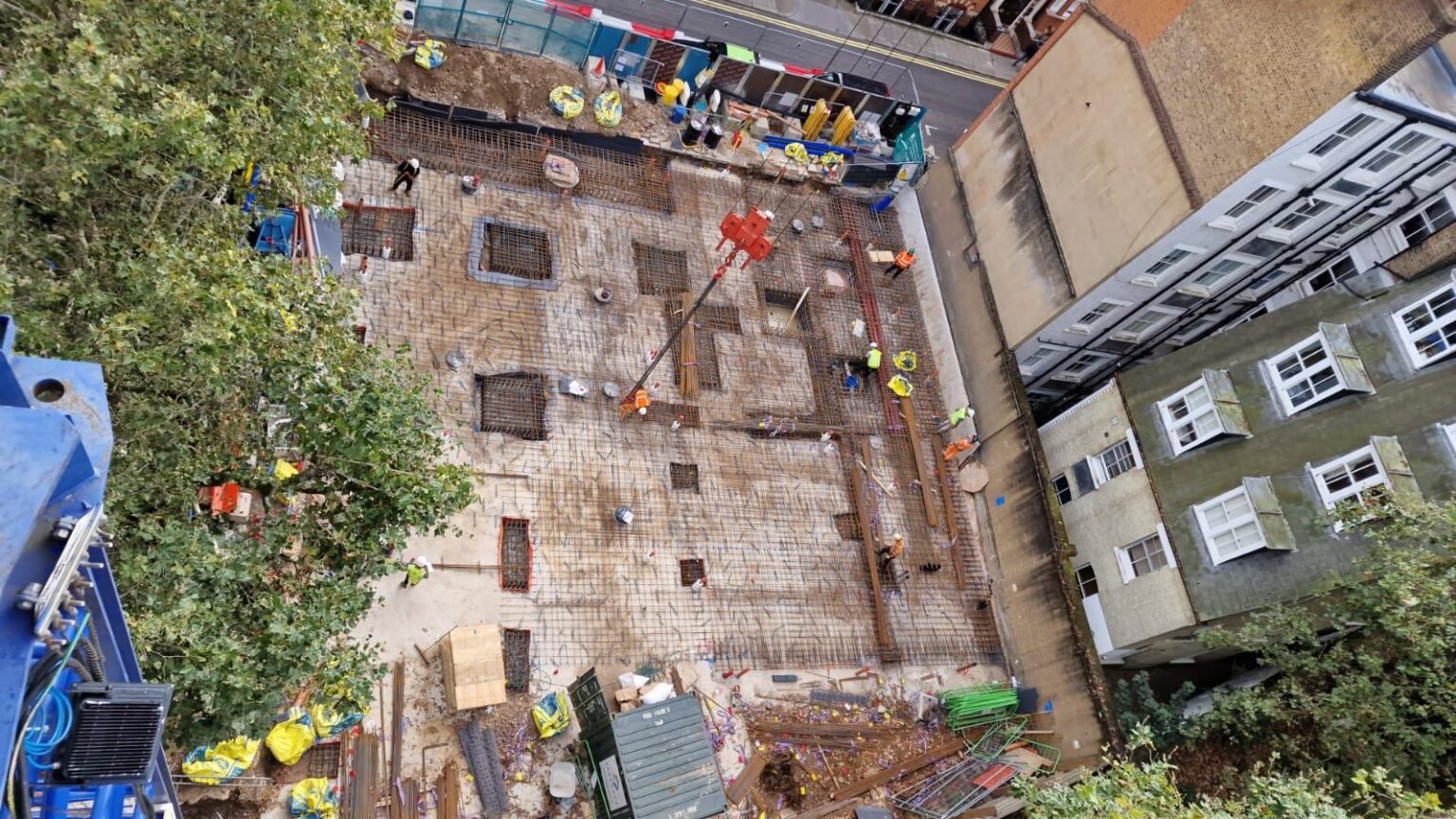
Located within a dense Westminster streetscape, this development presented restricted access, nearby party walls and a BT tunnel that influenced pile positioning.
Working collaboratively with the client, SPEEDECK optimised pile lengths and developed a cost-effective piled raft solution that maintained construction access while meeting programme requirements.
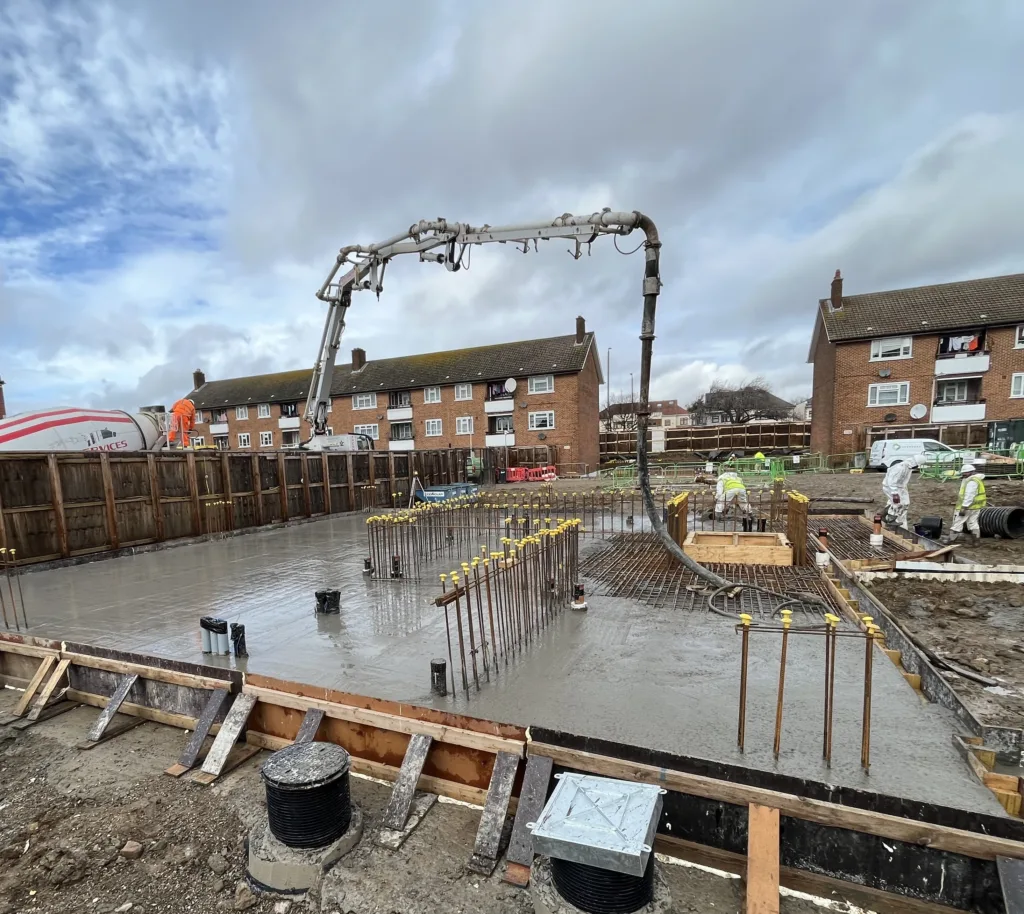
This residential development involved four apartment blocks constructed close to occupied homes. Ground investigations identified Made Ground over London Clay, requiring careful consideration of heave protection and foundation design.
Additional challenges included overhead services, vibration monitoring and restricted logistics, all of which were incorporated into the design and construction methodology.
Choosing the Right Foundation Partner
Urban developments leave very little room for error. The earlier foundation specialists become involved, the greater the opportunity to optimise the design, reduce construction risk and improve overall project efficiency. At SPEEDECK, our integrated geotechnical, structural and construction expertise allows us to design foundation solutions that are practical to build, cost-effective and tailored to the specific challenges of each urban site.
Whether you’re developing affordable housing, apartment blocks, mixed-use schemes or regeneration projects, we can help deliver a foundation solution designed around the realities of construction in today’s urban environments.