What is Made Ground?
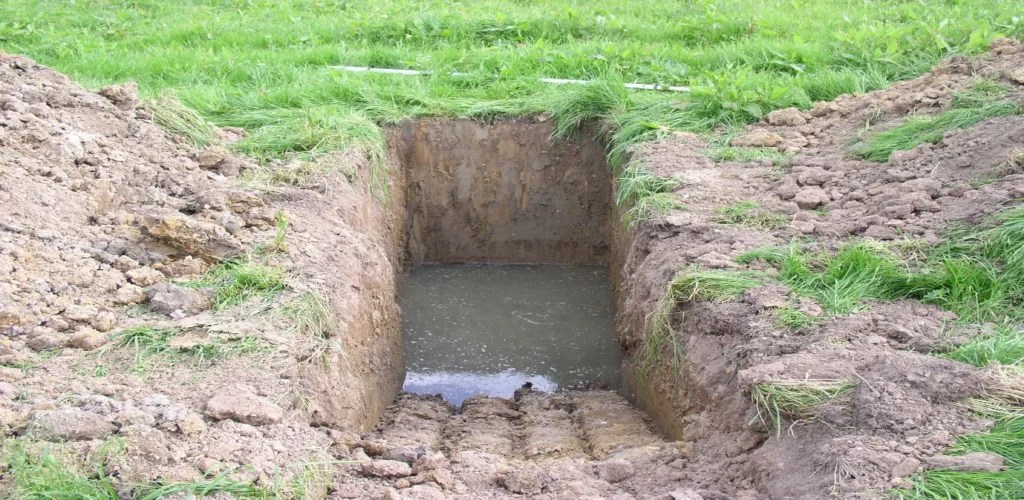
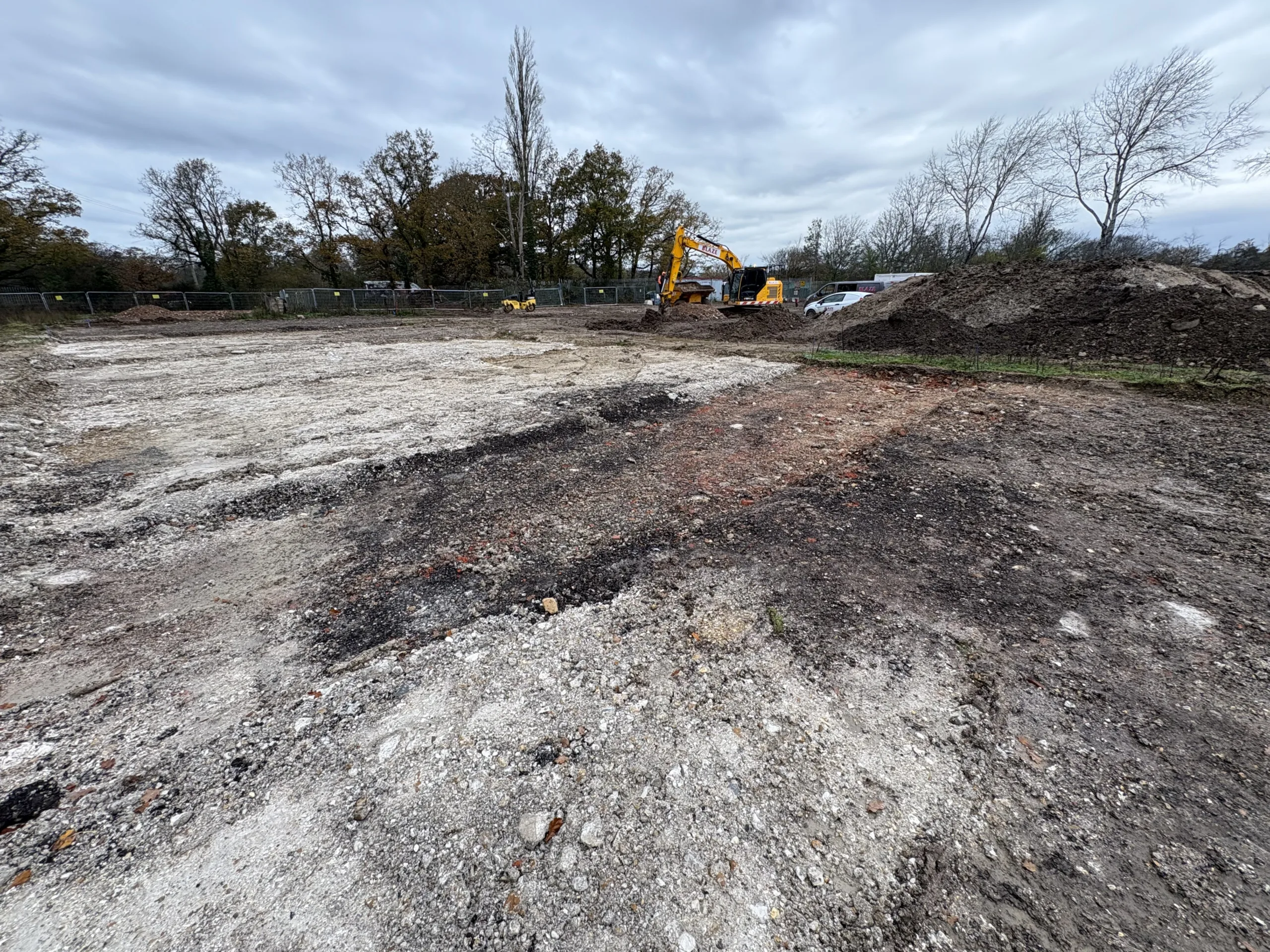
Made Ground is soil or material that has been placed by people rather than formed naturally. It can consist of demolition rubble, old foundations, ash, slag, brick fragments, reclaimed soils, fill material and construction waste.
Made Ground can be found on any site that has previously been used for another purpose, but it is commonly found on:
- Former factories
- Industrial estates
- Warehouses
- Petrol stations
- Railway land
- Quarries
- Landfill sites
- Redeveloped urban land
- Brownfield housing sites
As more housing developments are built on previously developed land across the UK, Made Ground is becoming one of the most common ground conditions encountered during site investigations.
The challenge isn’t simply that Made Ground exists, it’s that no two sites are the same.
Why is Made Ground Difficult to Build On?
Made Ground is rarely consistent.
Unlike natural soils that have formed over thousands of years, Made Ground is often placed in layers at different times using different materials and varying levels of compaction.
Within a single development you may encounter:
- Loose fill beside well-compacted fill
- Buried foundations
- Old concrete slabs
- Variable groundwater conditions
- Organic materials
- Contaminated soils
- Unexpected obstructions
The thickness of Made ground can also change quickly over short distances, which can lead to unexpected surprises during construction, even once a ground investigation has been performed.
These variations create uncertainty for foundation designers because the ground may behave very differently across the site.
Without the correct foundation strategy, this can increase the risk of:
- Differential settlement
- Cracking
- Programme delays
- Unexpected excavation
- Increased construction costs

Can Traditional Foundations Be Used on Made Ground?
Sometimes.
Engineered Fills can be of high quality if properly designed using good quality materials and compacted well. However, much Made Ground is not deliberately engineered and it is generally accepted practice not to place bearing foundations onto these sites. Traditional strip or trench fill foundations become deeper and more expensive as Made Ground thickness increases.
If suitable bearing strata cannot be reached, excavation depths can become excessive. This often results in larger concrete volumes and longer programmes to deal with this. Where Made Ground varies significantly across the site, traditional foundations may also struggle to provide consistent performance.
What Foundation is Best for Made Ground?
Where deep and variable Made Ground exists across developments, piled raft foundations are frequently one of the most effective engineering solutions.
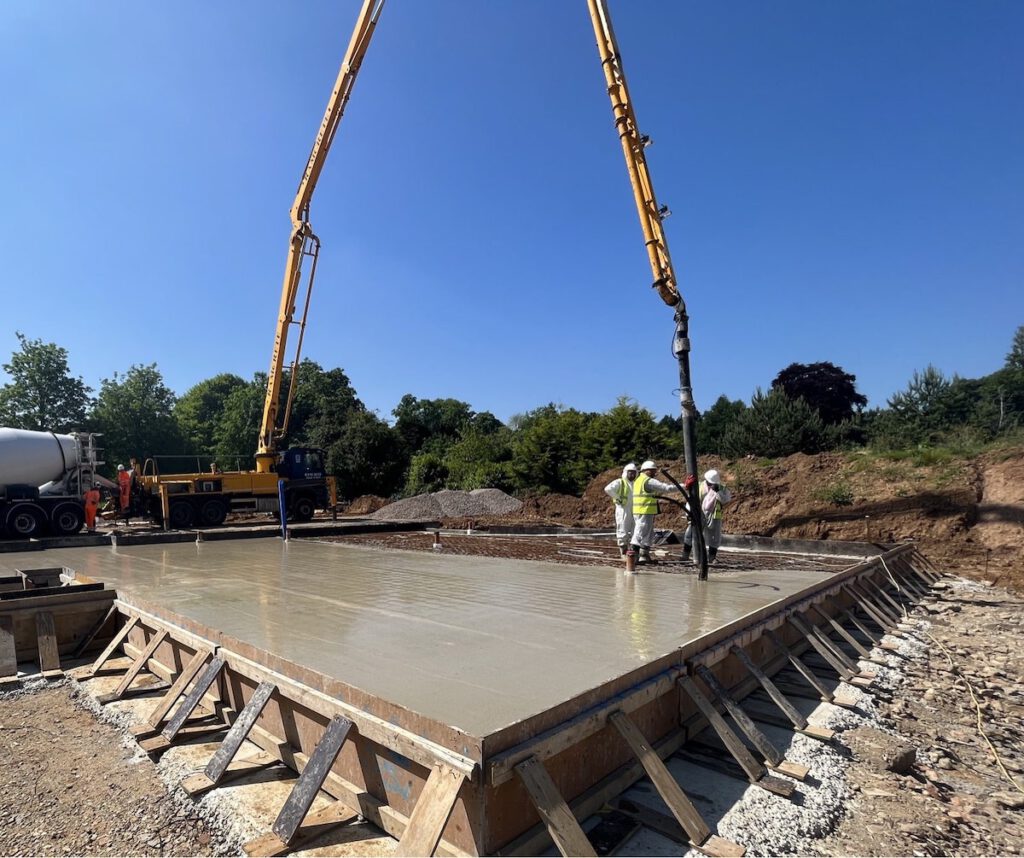
Rather than relying entirely on shallow bearing soils, piled raft foundations combine a reinforced concrete raft with strategically positioned piles that transfer loads into stronger underlying strata. This provides a foundation capable of accommodating variable near-surface ground conditions while reducing settlement risks.

Why Piled Raft Foundations Perform Well on Made Ground
Piled raft foundations are particularly suited to sites where shallow ground conditions are inconsistent.
Instead of excavating large volumes of Made Ground, the structural loads are transferred through piles into competent bearing layers beneath.
Since Made Ground can be contaminated, this approach offers reduced excavation which means lower disposal costs, reduced programme risk and fewer imported materials.
In addition, if deep obstructions are found in the Made Ground, it is straightforward to adjust the pile layout on a piled raft, even during construction, to avoid the obstructions and complete the foundation without delay.
Lower embodied carbon
Reducing excavation, imported fill and concrete volumes can significantly reduce the embodied carbon associated with foundation construction. As sustainability becomes increasingly important, foundation selection plays a major role in reducing a project’s environmental impact.
Are All Brownfield Sites the Same?
No.
Two former industrial sites can have completely different engineering challenges.
Factors that influence foundation design include:
- Previous site use
- Historic foundations
- Ground contamination
- Fill depth
- Water table
- Geological strata
- Building layout
- Structural loads
This is why detailed ground investigation is essential before selecting a foundation solution.

How SPEEDECK Designs Foundations for Made Ground
We don’t simply recommend piled raft foundations because they are our product.
Every project begins with understanding the site’s geotechnical conditions, structural requirements and construction programme.
Our in-house engineers review ground investigation reports, building loads site constraints and programme requirements.
Where a piled raft foundation provides the best technical and commercial solution, we design a fully engineered system that reduces excavation, improves programme certainty and delivers a cost-effective foundation.
This collaborative design process has enabled us to deliver foundations on developments ranging from former factories and commercial land to challenging brownfield housing sites across the UK.
Speak to Our Foundation Engineers
If your site investigation has identified Made Ground, we’ll help you assess the most appropriate foundation solution for your development. Our engineering team regularly designs piled raft foundations for residential schemes on former industrial, commercial and brownfield sites, helping developers reduce excavation, improve programme certainty and build with confidence.
Recent projects with Made Ground:
Frequently Asked Questions
Can you build houses on Made Ground?
Yes. Many residential developments are successfully constructed on Made Ground. The key is selecting a foundation solution based on a detailed ground investigation and appropriate engineering design.
Does Made Ground always need piling?
No. Some sites may be suitable for shallow foundations, while others benefit from piling or piled raft foundations. The correct solution depends on the depth, strength and consistency of the Made Ground.
Is Made Ground considered poor ground?
Not necessarily. Some Made Ground performs well, while other areas may contain loose fill, obstructions or variable materials. Each site must be assessed individually.
How do engineers assess Made Ground?
Engineers use ground investigations, including boreholes, trial pits and laboratory testing, to determine the composition, thickness and engineering properties of the Made Ground before designing foundations.
What is the biggest risk when building on Made Ground?
The primary risk is variability. Changes in ground conditions across a site can lead to uneven settlement if foundations are not designed to accommodate them.