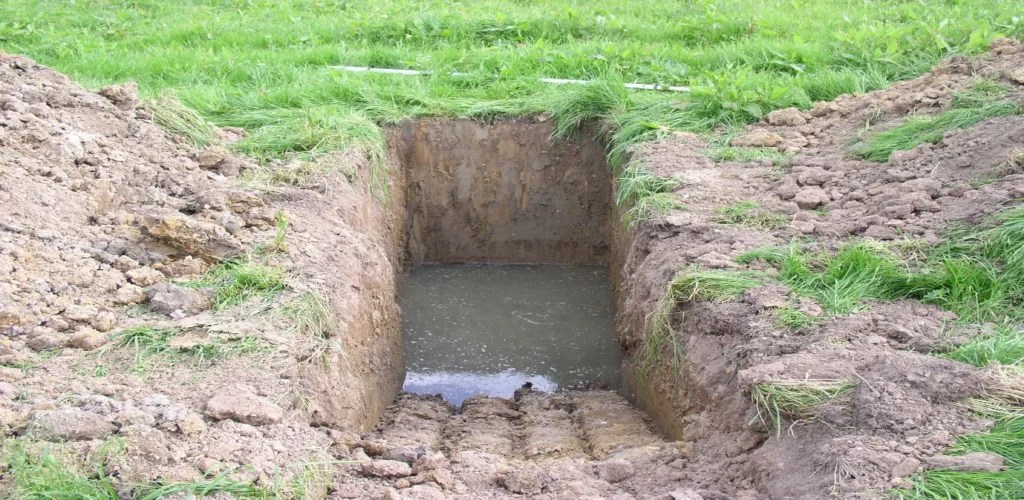
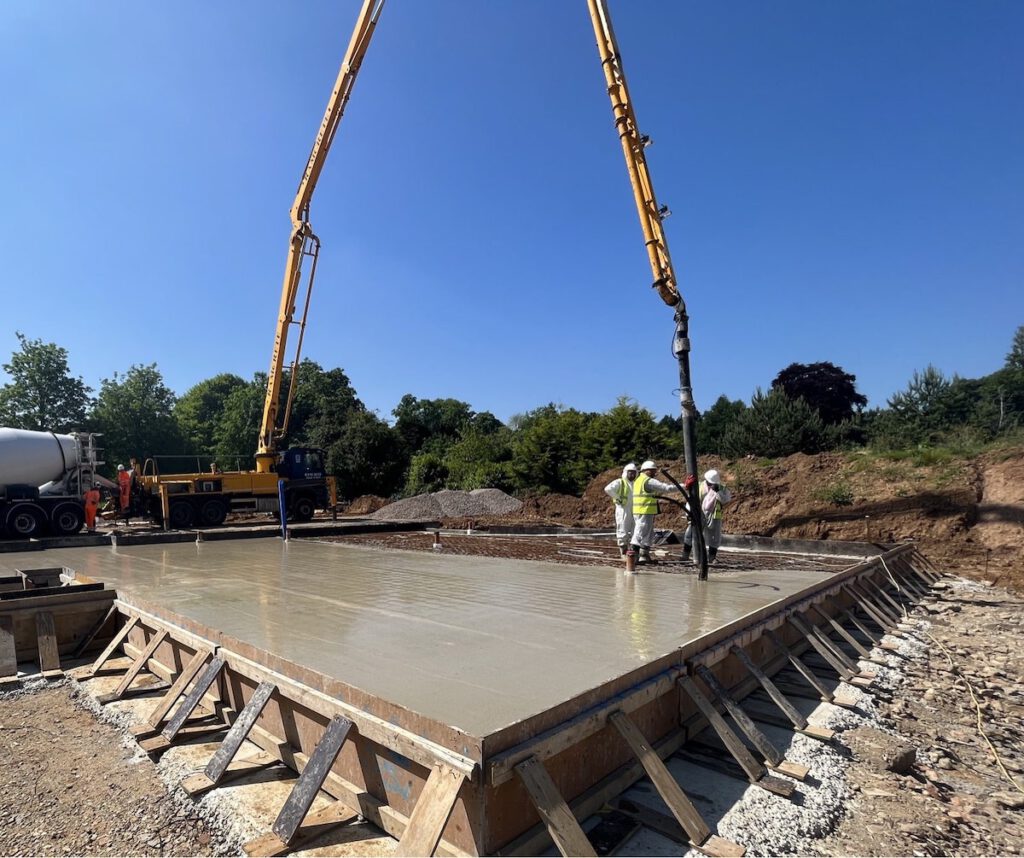
Clay and mudstone are common geological formations across the UK, but their presence does not automatically determine a particular foundation solution.
The engineering challenge is understanding how the ground will behave beneath the proposed development.
Clay-rich soils can experience changes in volume as moisture conditions change, while mudstone can present a combination of weathered rock, clay-rich material and stronger underlying strata. The behaviour of both can vary significantly with depth, groundwater conditions, weathering, trees and the history of the site.
For developers and contractors, the important question is therefore not simply “Is there clay on site?” but:
What does the ground investigation tell us about the behaviour of the clay or mudstone, and how should the foundation design respond to it?

At SPEEDECK, our geotechnical and structural engineers assess these conditions as part of the foundation design process, considering the ground profile alongside structural loading, tree influence, heave risk, groundwater and construction requirements.
Why clay can affect foundation design
Shrinkable clay can change volume as its moisture content changes. During dry conditions, clay can lose moisture and shrink. When moisture is subsequently introduced, it can swell again. This movement can be particularly important where foundations are located within the zone affected by seasonal moisture variation or tree root activity.
The British Geological Survey identifies clay-rich formations as being susceptible to shrink–swell behaviour, with the degree of movement depending on the characteristics of the material and its moisture condition.
For foundation design, this means the investigation needs to establish more than simply the presence of clay. The engineering assessment may need to consider a variety of geotechnical considerations.
Tree influence can be particularly significant. Trees extract moisture from the surrounding soil, increasing the potential for desiccation and shrinkage. When trees are removed, the subsequent increase in soil moisture can result in swelling or heave.
NHBC guidance requires foundation design near trees to take account of factors including the soil’s volume-change potential, tree water demand, tree height, distance from the foundation and appropriate heave precautions.

Clay does not behave the same way on every site
One of the most important considerations in foundation design is that a geological description alone does not provide the complete engineering picture. A site may contain relatively competent clay at one depth and weaker or more variable material elsewhere. Made Ground may overlie the natural clay, while sand, gravel, groundwater or weathered material can interrupt the geological profile.
This variability can affect both the foundation type and the detailed design.
For example, at Croyland Road, Wellingborough, the site comprised variable depths of Made Ground over the Whitby Mudstone Formation. The underlying material consisted of stiff to firm clay with medium to high volume-change potential. The site also included significant tree influence zones.
Rather than treating the entire site as a uniform ground condition, SPEEDECK’s design incorporated a combination of voided and non-voided piled rafts, with voided piled rafts used where the clay and tree influence created a greater requirement for heave protection.
The project delivered 10 piled rafts supporting 24 homes within an eight-week construction period. This project shows how the foundation solution was driven by the specific ground and site conditions, rather than simply by the geological name of the formation.

What about mudstone?
Mudstone is a fine-grained sedimentary rock that can behave very differently depending on its degree of weathering, composition, moisture condition and depth. Some mudstone formations contain significant clay minerals and can therefore be susceptible to volume change. Other profiles may transition from weathered, weaker material into more competent rock with increasing depth.
That transition can be important when designing piles. The pile design needs to establish where competent bearing material is located and how the pile will interact with the different strata encountered through the ground profile.
This was demonstrated at Elsea Park, Bourne, where the ground investigation identified firm silty clay with interbedded sand layers, followed by a rock profile containing a thin siltstone layer over weaker mudstone and stronger limestone.
SPEEDECK designed 350mm diameter CFA piles with each pile embedded 0.5m into the underlying rock strata. More than 1,000 piles were installed, representing over 7,000 linear metres of piling, while the foundation design covered approximately 6,370m² of structural slabs.
The site also required heave protection because all plots were within potential tree influence zones. The project demonstrates why pile length should be established from the actual geological and engineering profile, rather than assuming that reaching a particular geological formation automatically provides the required performance.
SPEEDECK’s approach to clay and mudstone sites
At SPEEDECK, foundation design starts with the ground investigation rather than a predetermined foundation type.
Our in-house geotechnical and structural engineers assess the ground profile, structural requirements and site constraints before developing the foundation solution. Where piled raft foundations are appropriate, pile diameter, length, spacing, raft thickness and heave protection can be engineered around the conditions encountered on the individual development.
Our project experience includes sites involving London Clay, Oxford Clay, Whitby Mudstone, mixed Made Ground, weathered rock, tree influence and shallow groundwater.
The result is a foundation design based on the engineering requirements of the site, not simply its geological classification.
Working with challenging ground conditions?
If your site investigation has identified clay, mudstone, shrinkable soils, tree influence or variable ground conditions, SPEEDECK can review the available information and assess the foundation options for the development.