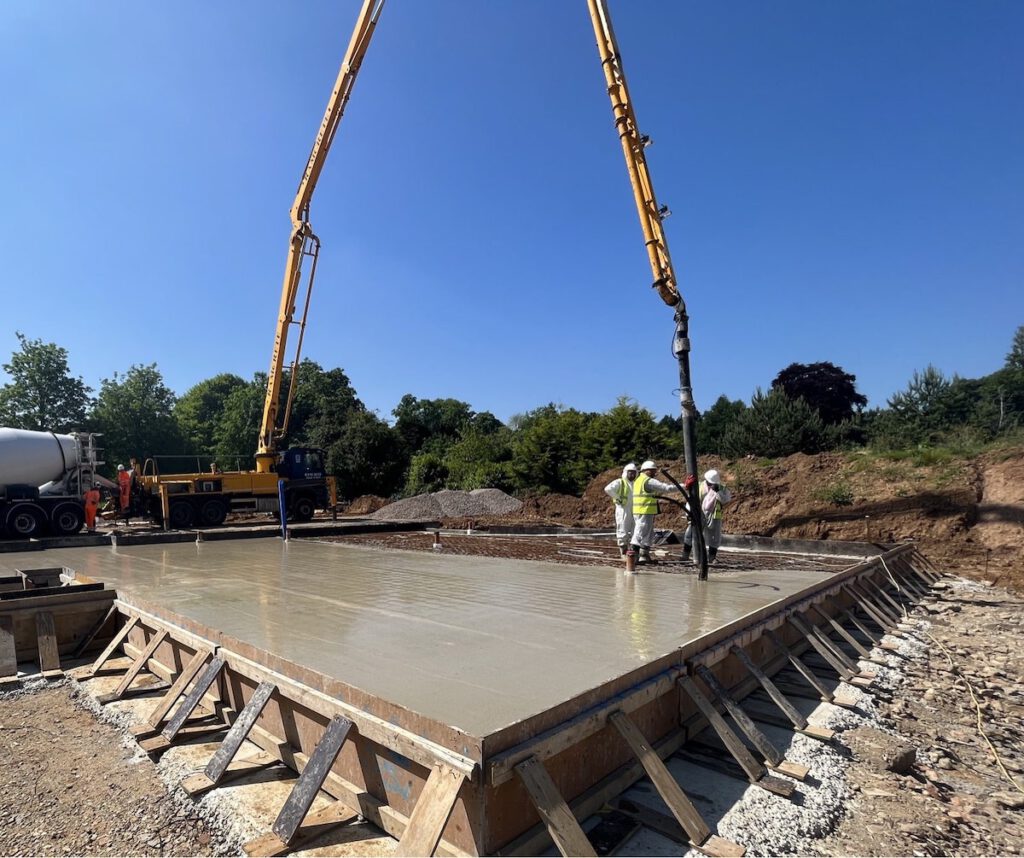


Building on contaminated ground is increasingly common as brownfield and previously developed sites are brought forward to meet housing and regeneration demand. While contamination can introduce additional risk, it does not need to prevent development or compromise long-term performance. With the right foundation strategy, contaminated ground can be managed safely, efficiently and with confidence from the outset.
This article explores why contaminated ground presents particular challenges for foundations and how early, informed foundation design can significantly reduce risk, improve buildability and support programme certainty.
What is contaminated ground?
Contaminated ground typically refers to land where substances are present that could pose a risk to human health, the structure itself or the wider environment. This is most commonly associated with brownfield sites or land with a history of industrial, commercial, or agricultural use.
Contamination can take many forms, from made ground containing hydrocarbons or heavy metals, to ground gases such as methane, carbon dioxide or radon. These conditions are often variable across a site, making early assessment and an appropriate foundation response critical.

Ground Gas Membrane installed at Eastbourne Development
Why contaminated ground creates foundation challenges
Foundations sit at the interface between the building and the ground, meaning they are directly affected by contamination-related risks. These can include exposure of site operatives during excavation, the need for complex gas protection measures and the potential for chemical attack on concrete elements if materials are not correctly specified.
In many cases, contamination also places constraints on excavation and material removal. Dig-and-replace solutions can become costly and disruptive, increasing the volume of contaminated spoil requiring treatment or disposal while extending programme duration.

Ashfield Tyre Depot Project on a brownfield site.
The limitations of traditional foundation approaches
Traditional shallow foundations often rely on significant excavation and ground disturbance. On contaminated sites, this can increase exposure risks, complicate health and safety management and introduce uncertainty around remediation requirements.
Deeper excavation can also trigger more onerous gas protection detailing and increase reliance on multiple interfaces between ground remediation, membranes and structural elements. This complexity can impact both buildability and long-term assurance if not carefully coordinated.
Reducing risk through foundation choice
Rather than attempting to remove or fully remediate contaminated ground, an alternative approach is to manage and isolate it. Foundation design plays a key role in achieving this by limiting disturbance, reducing excavation depth and creating effective separation between the structure and the underlying ground.
An integrated foundation strategy can incorporate gas protection, durability requirements and structural performance into a single, coordinated solution. This reduces reliance on multiple trades and helps ensure that contamination risks are addressed consistently across the site.
Why piled raft foundations suit contaminated ground
Piled raft foundations are particularly well-suited to sites affected by ground contamination. By transferring loads to deeper, more competent strata, the need for extensive excavation within contaminated soils is significantly reduced. Depending on the pile construction method selected, the volume of contaminated arisings generated can be reduced or eliminated entirely.
The raft element provides a robust platform for integrating gas protection measures, including membranes designed to address radon and other ground gases. This creates a controlled separation between the building and the ground while maintaining on-site buildability and quality.
From a construction perspective, the reduced ground disturbance associated with piled raft solutions supports cleaner, safer working practices and limits exposure risks for site teams.

Compliance, durability and long-term performance
Managing contaminated ground is not only about construction-stage safety, but also about long-term assurance. Foundation systems must satisfy building control and warranty provider requirements while protecting the structure over its design life.
A well-designed piled raft solution can address chemical resistance, gas protection and structural performance in line with NHBC and regulatory guidance, providing confidence for developers, designers and future occupants alike.
The importance of early foundation strategy
As with many ground-related challenges, contaminated ground is best addressed early. Understanding site conditions and selecting an appropriate foundation solution at the outset can significantly reduce risk, improve cost certainty and simplify construction.
If you are assessing a site with known or potential ground contamination, early engagement around foundation strategy can help unlock development potential while maintaining control and confidence throughout the project lifecycle.
Learn more about managing radon and ground gas risks through our Radon Gas Foundations and Ground Gas Risk articles.