Projects

Fairmile Lane Cobham Residential Development

  • Client
    Chartridge Developments Ltd
  • Location
    Cobham, Surrey
  • No. of Units
    4 units
  • Residential Properties

Project Overview

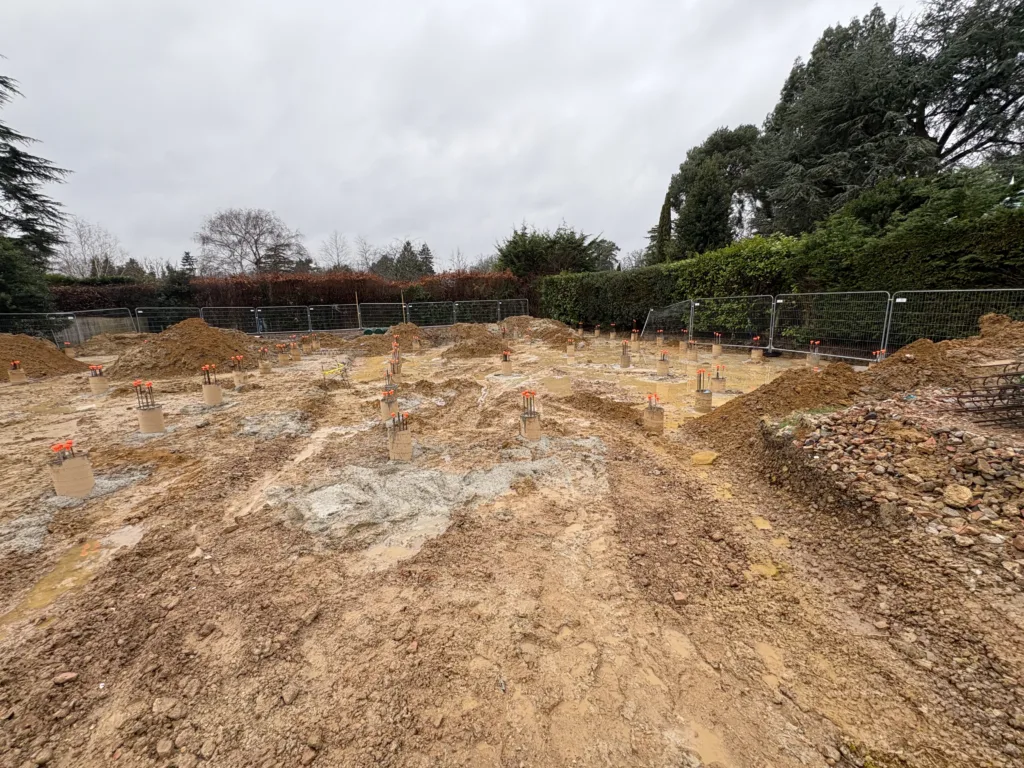
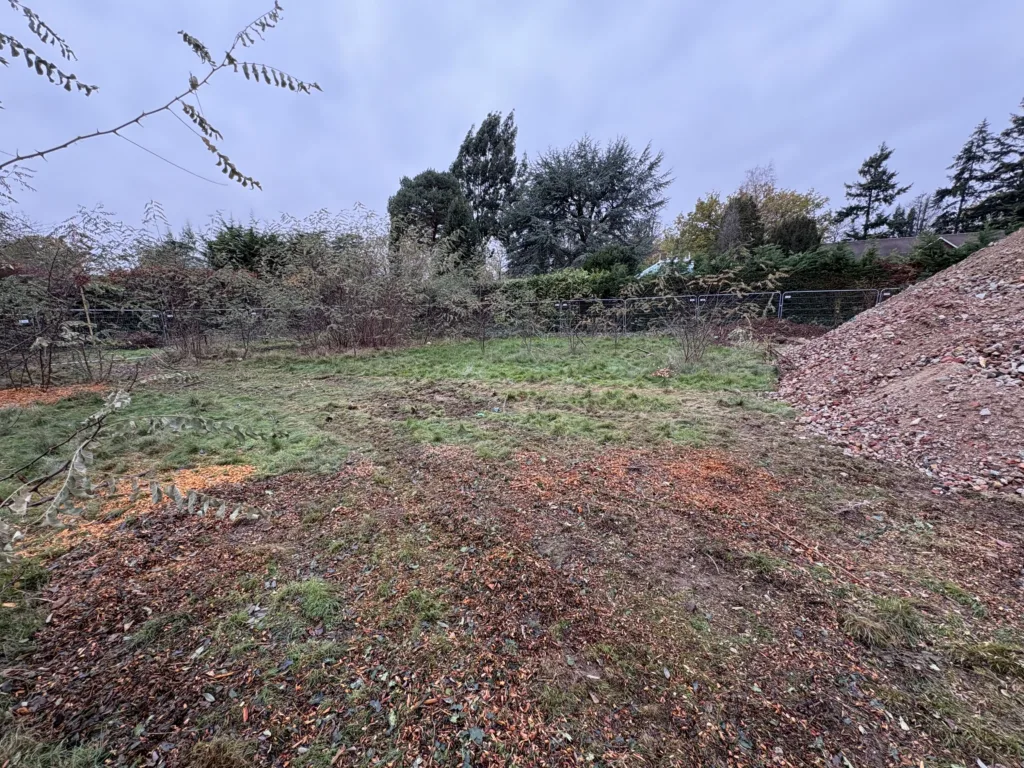
Fairmile Lane presented a combination of challenging ground conditions and tree influence, with all four plots falling within the mapped tree influence zone. With clay shrinkage and heave a key consideration, Chartridge Developments required a foundation solution that could accommodate the ground conditions while providing a practical route through to construction.

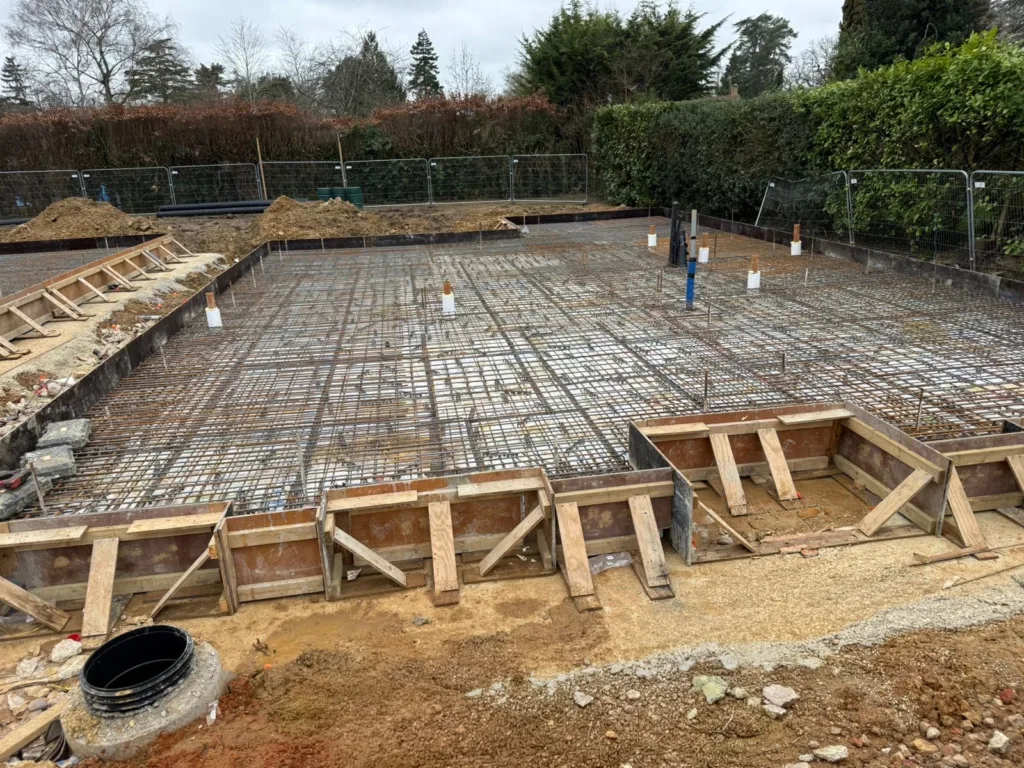
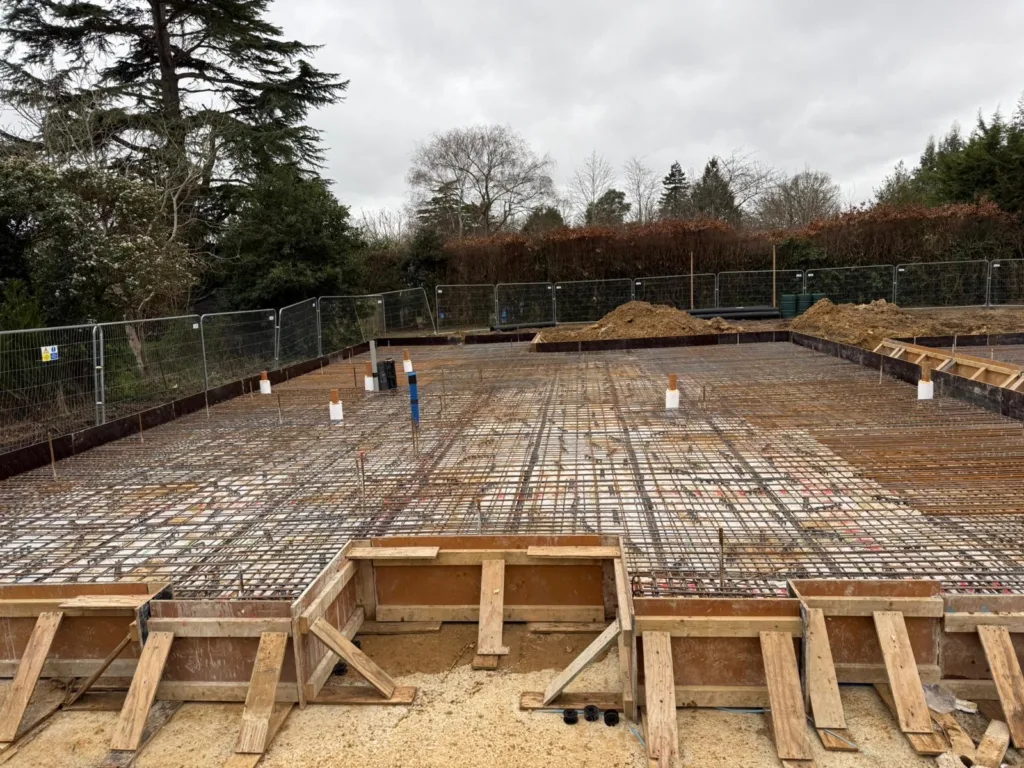
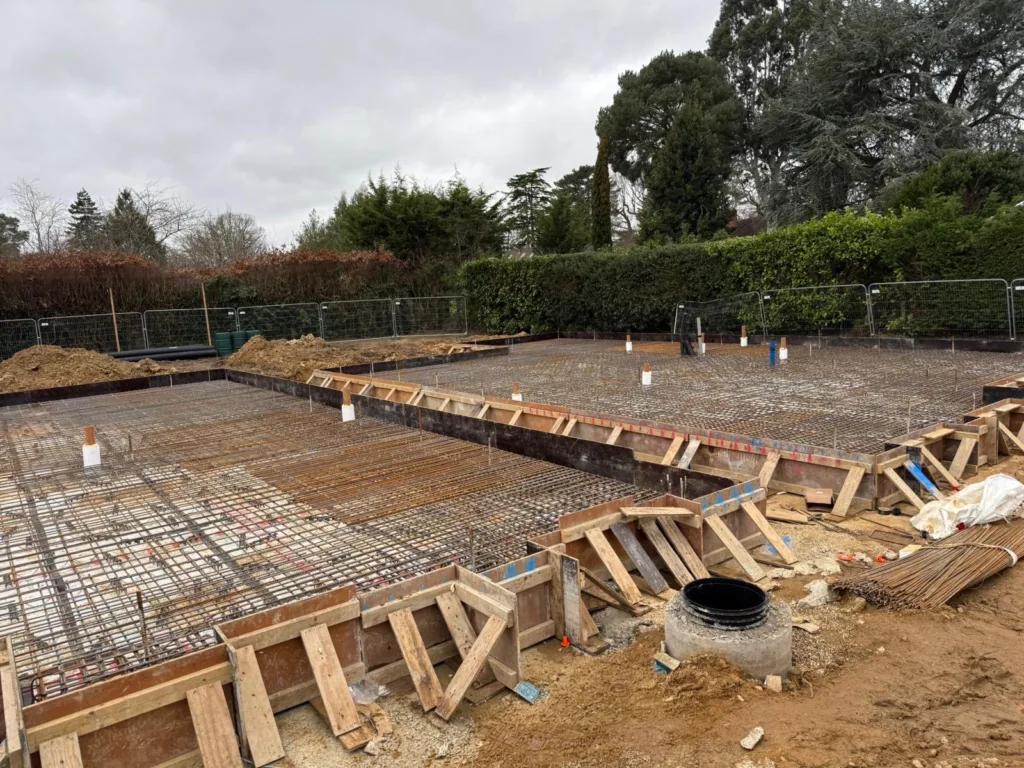
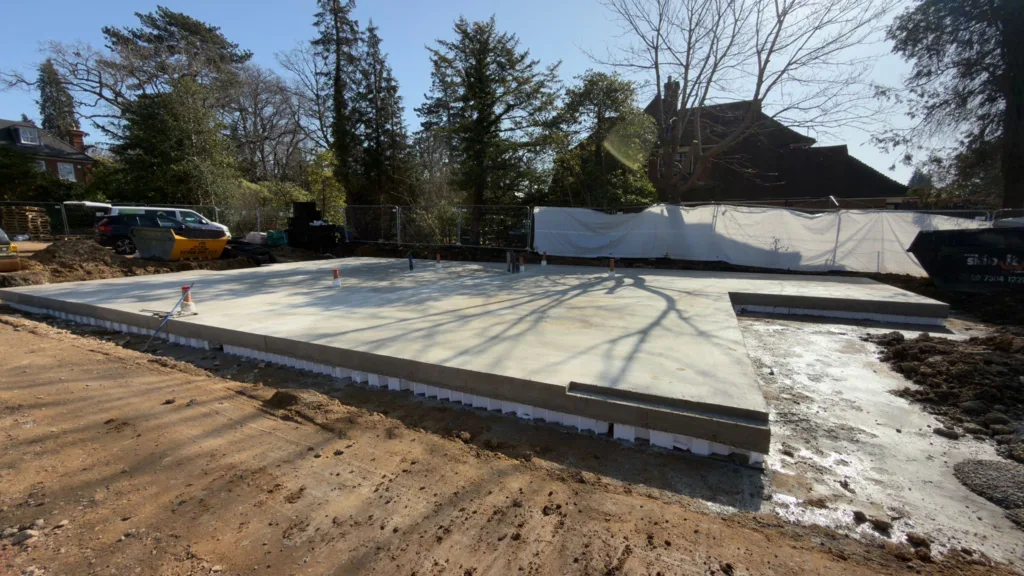
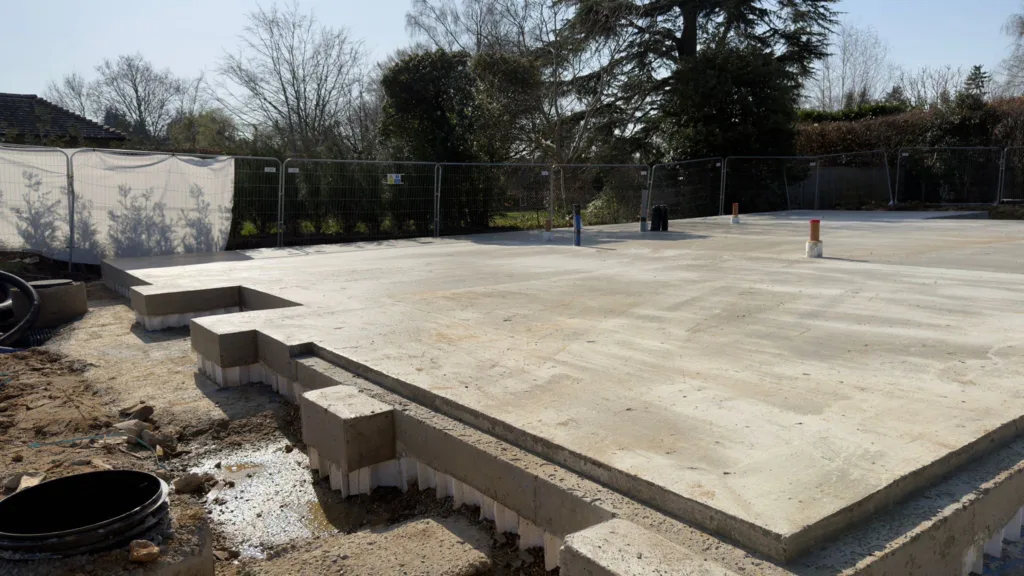
SPEEDECK designed and delivered four voided piled rafts, providing a complete substructure package from piling through to structural slabs, including underslab drainage and services.

  • 35% concepting
  • 35% detailed design
  • 30% duration on site.
Time Spent Data
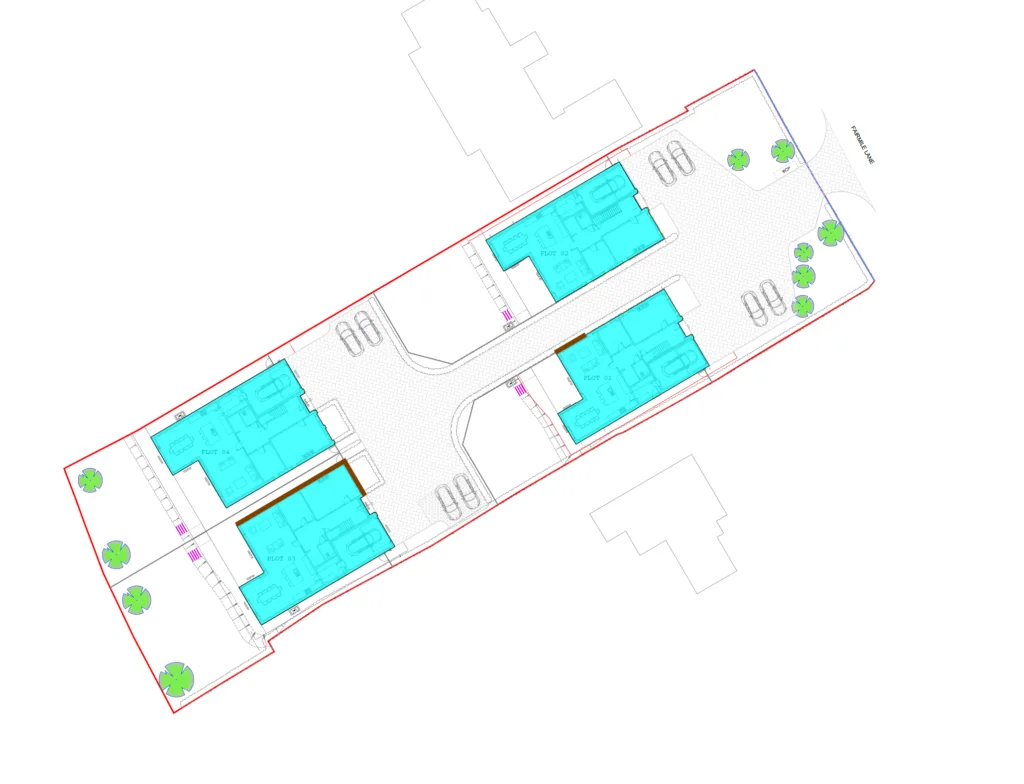
Key plan fairmile lane cobham
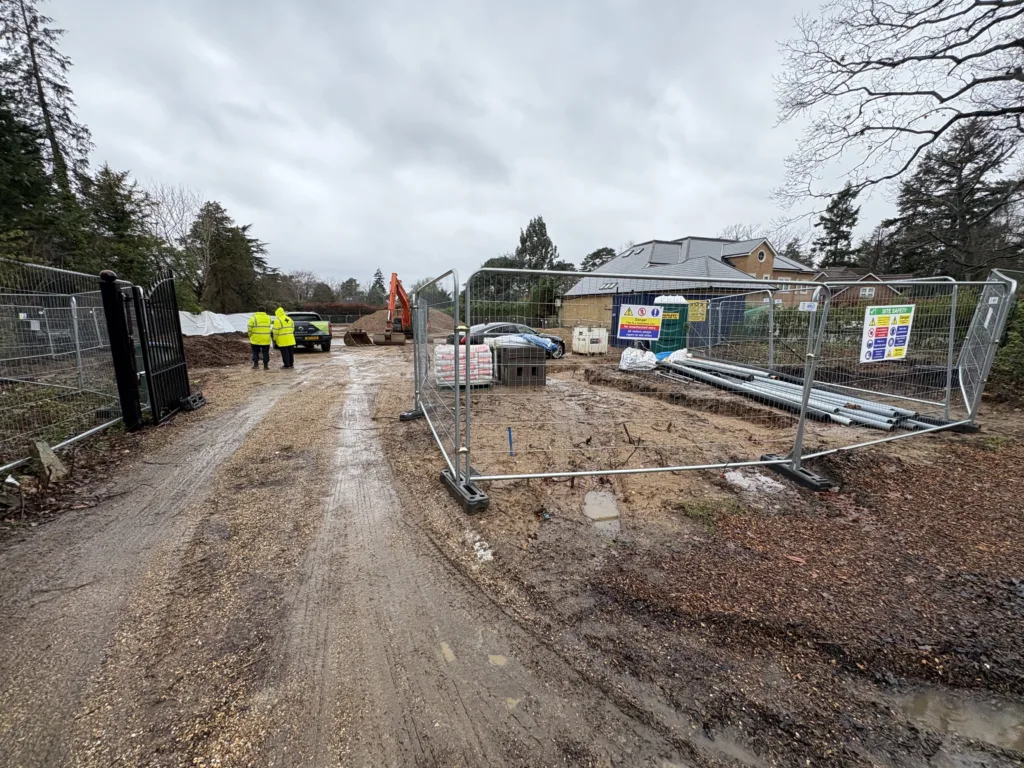
Site start at Fairmile Lane Cobham
Site entrance at Fairmile Lane with SPEEDECK
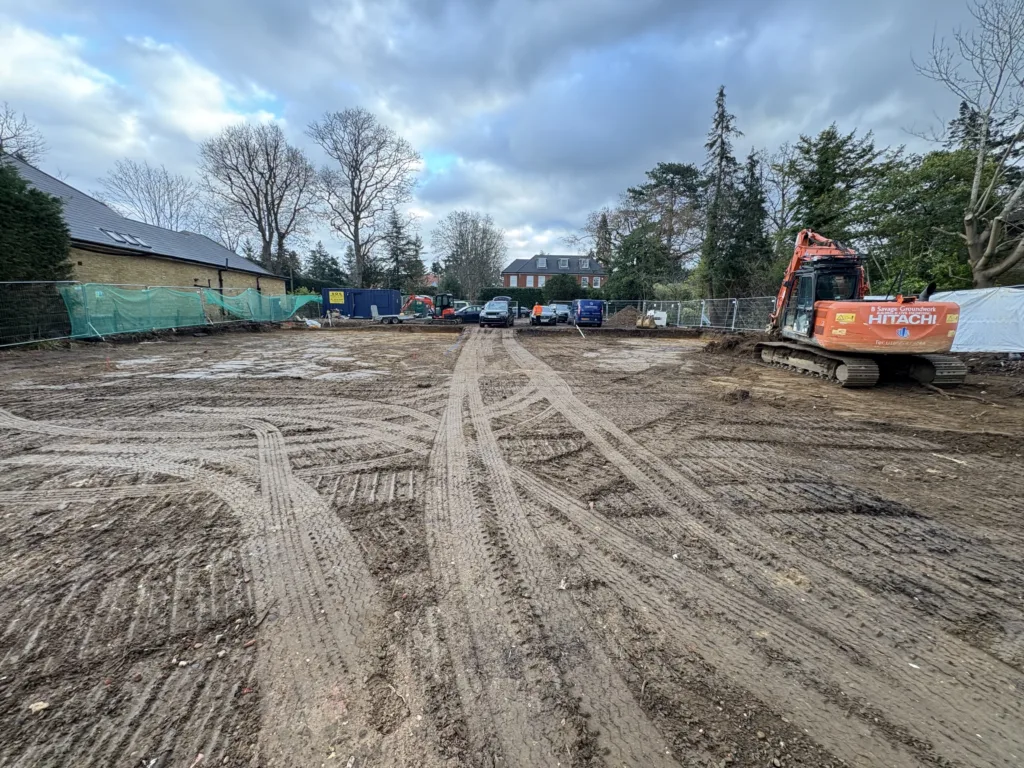
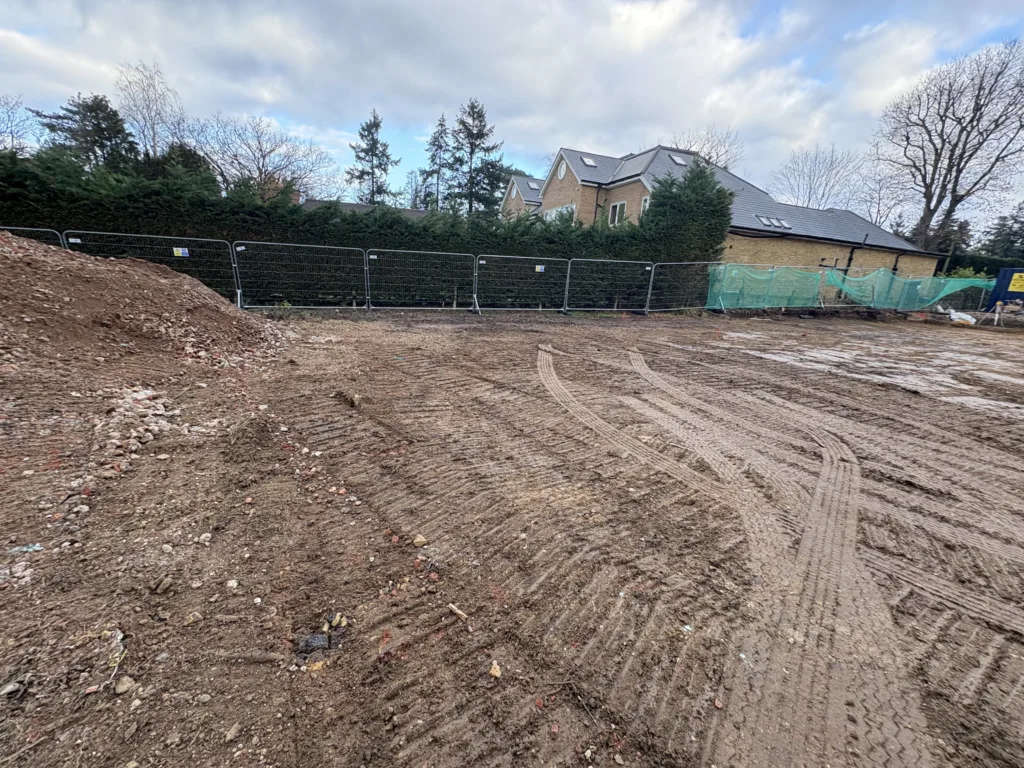
Site ready at Fairmile Lane 2
Site ready at Fairmile Lane

Concept Design

An initial desk study classified the site as having high volume change potential (HVCP). Rather than designing around that initial classification, further Atterberg testing was undertaken to establish the actual ground conditions. The additional testing refined the classification to low-to-medium volume change potential, allowing the design to be optimised accordingly.

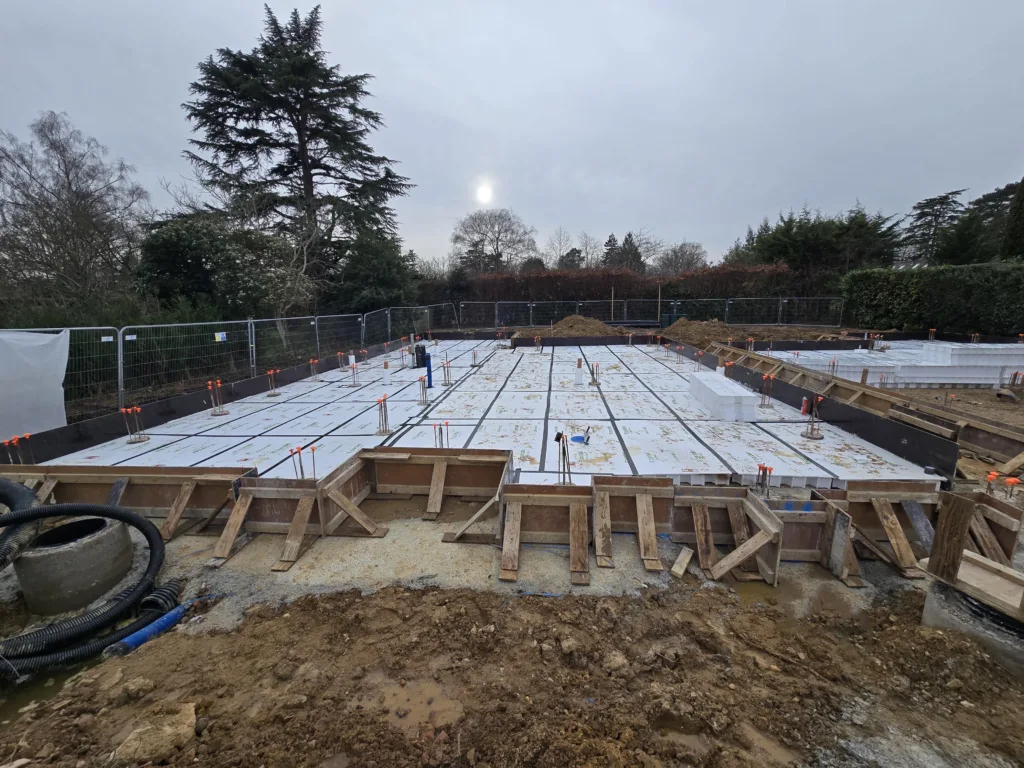
A 160mm voidformer was therefore adopted for the piled raft, providing the required protection against clay heave without the additional depth that would have been required for a high volume change classification. The ground profile comprised Made Ground over the Bagshot Formation, with the underlying strata consisting of gravelly sand, sand and gravel, and sandy to gravelly clay.
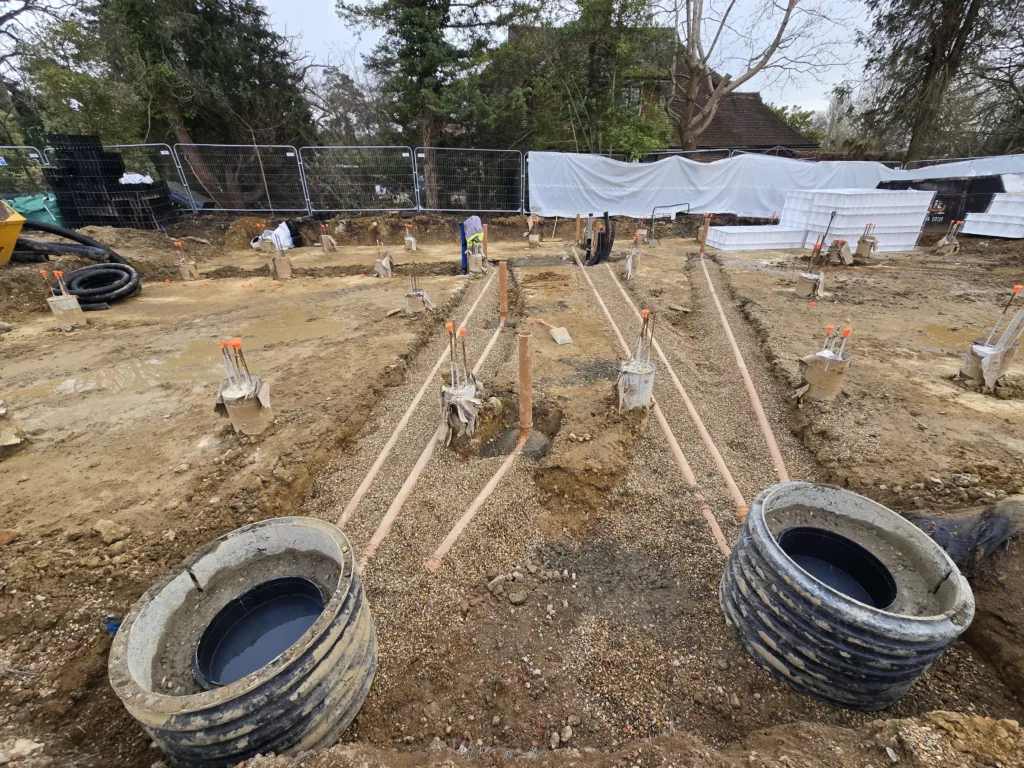
Drainage at Fairmile Lane Cobham
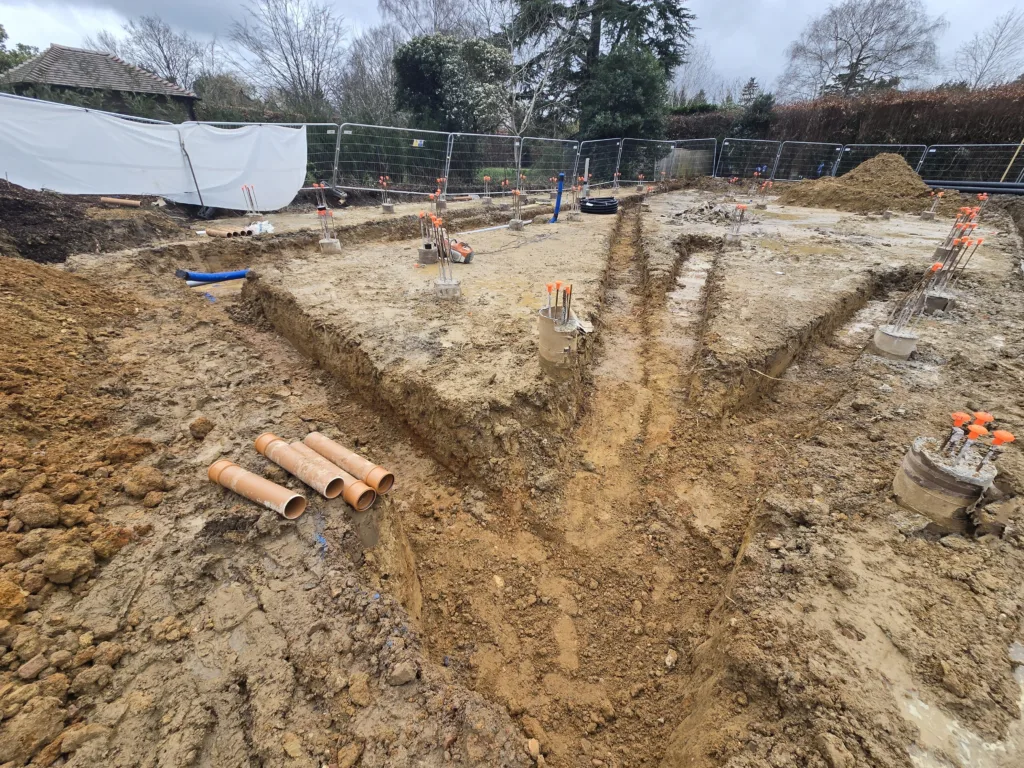
Drainage and services at Cobham
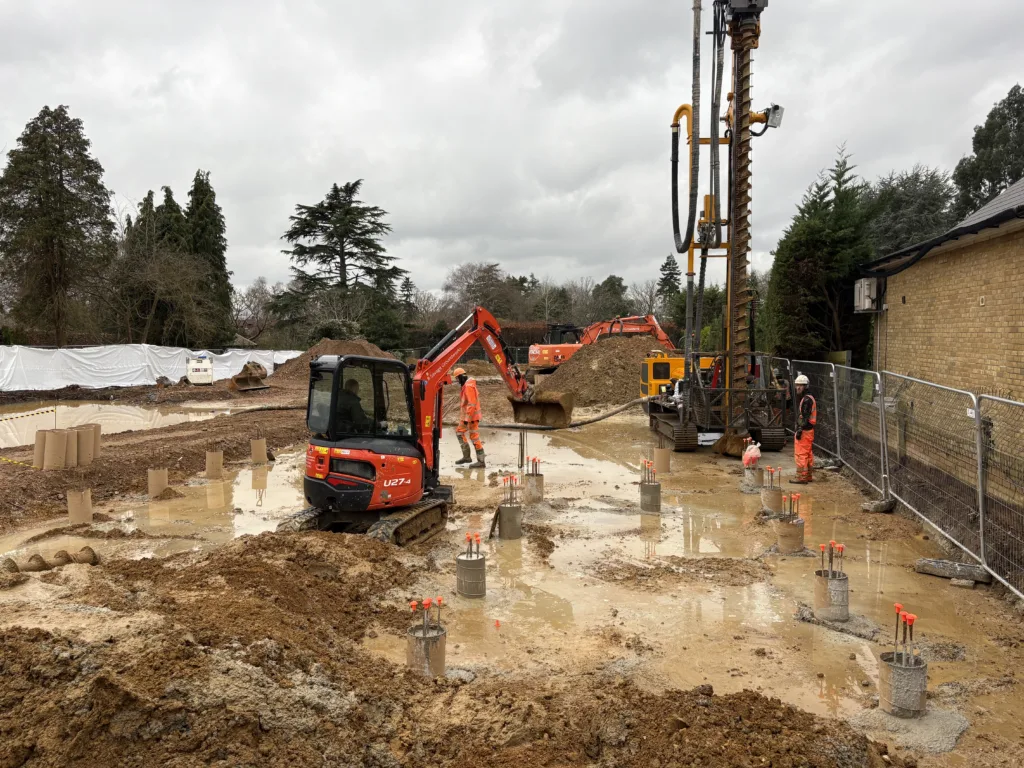
Piling at Fairmile Lane Cobham
Piling at Fairmile Lane with SPEEDECK
Piling with Chartridge Developments

Design Engineering

Made Ground extended between approximately 0.15m and 0.5m before reaching the Bagshot Formation, which was proven to 20m.

Groundwater encountered at between 0.8m and 1.0m in several boreholes was assessed as perched water rather than the true groundwater table. A representative groundwater level of approximately 14m below ground level was therefore adopted and did not govern the foundation design.

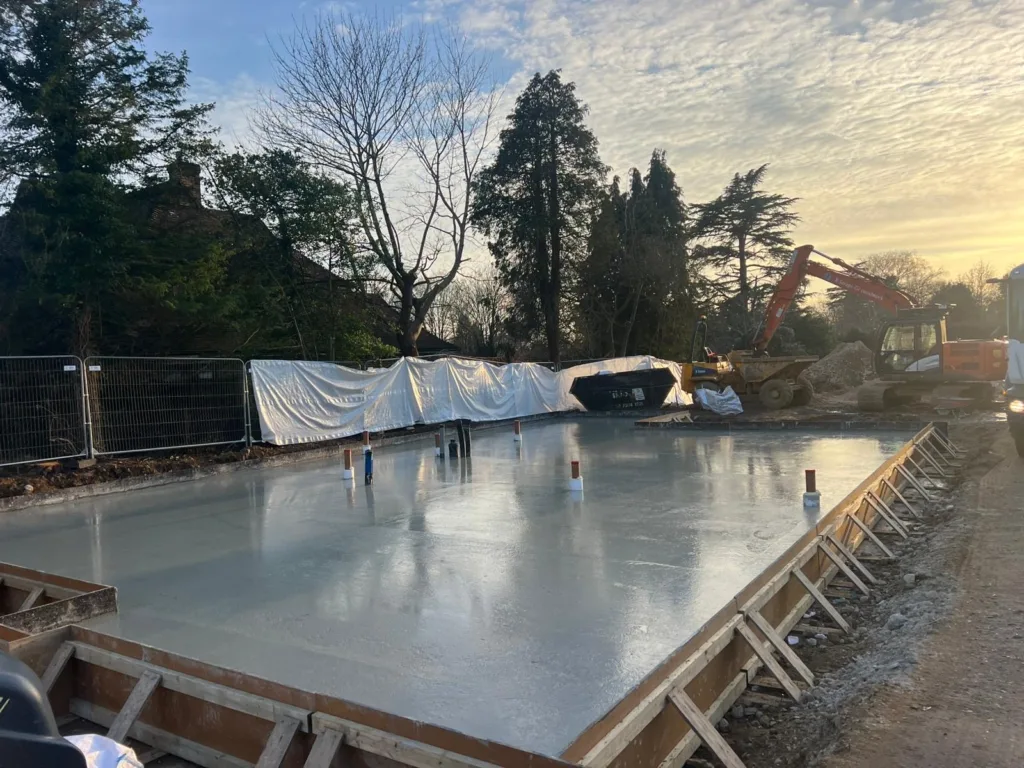
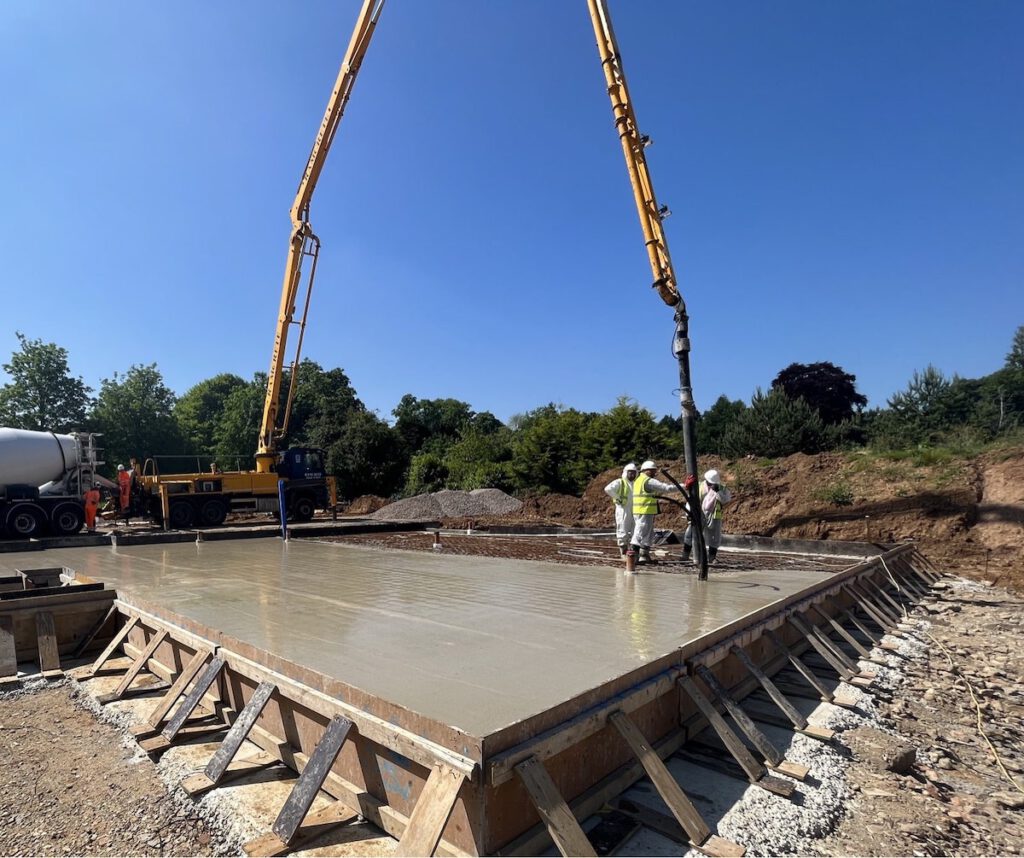
Each piled raft was supported on 300mm diameter piles, typically between 7m and 13m long, with a maximum safe working load of approximately 320kN. The foundation comprised a uniform 225mm RC35 structural slab over the voided system.

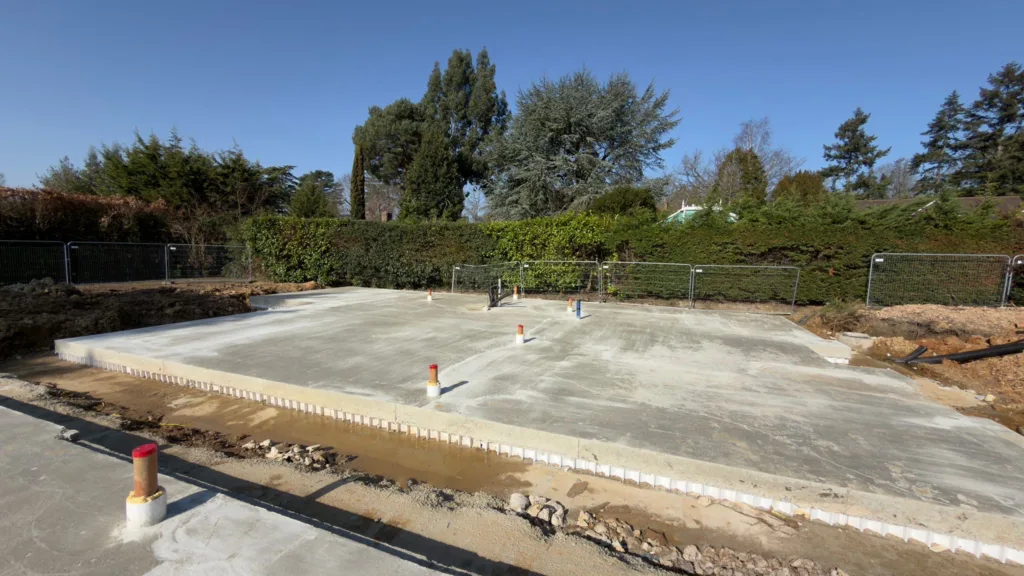
Heave protection from SPEEDECK at Cobham
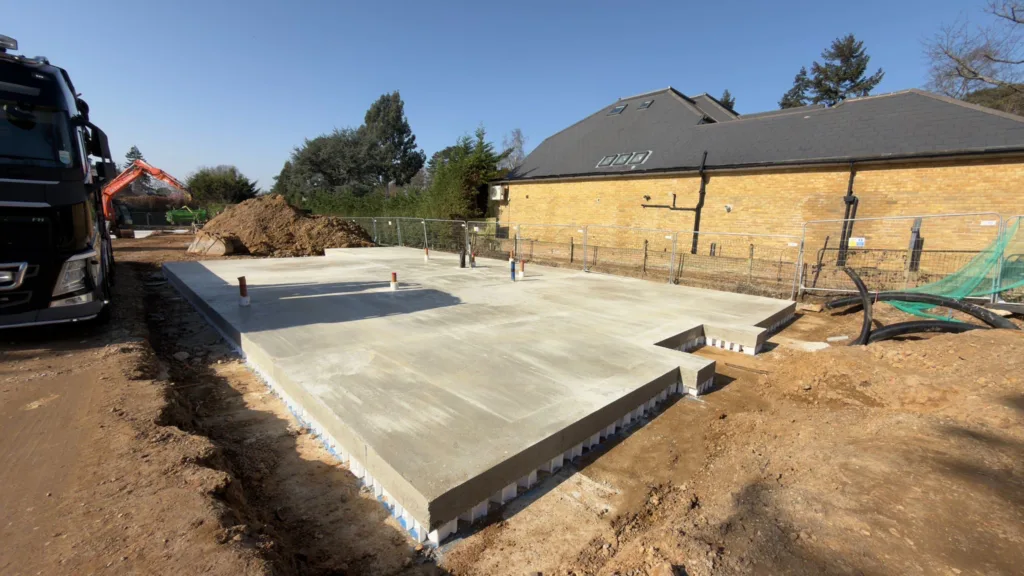
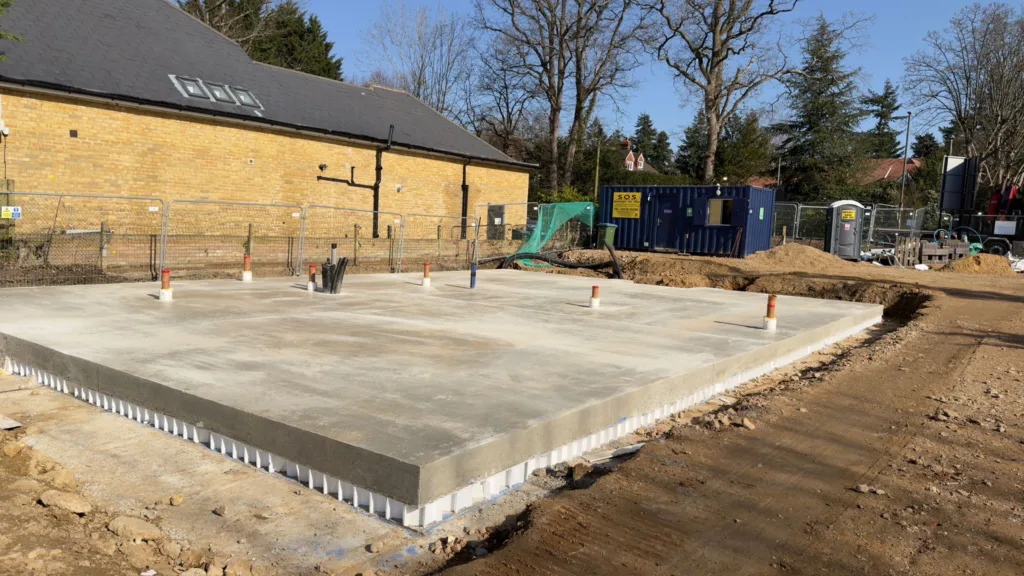
Piled raft foundation construction with SPEEDECK at Cobham
Piled raft foundations at Chartridge Developments
Raft construction from SPEEDECK Foundations
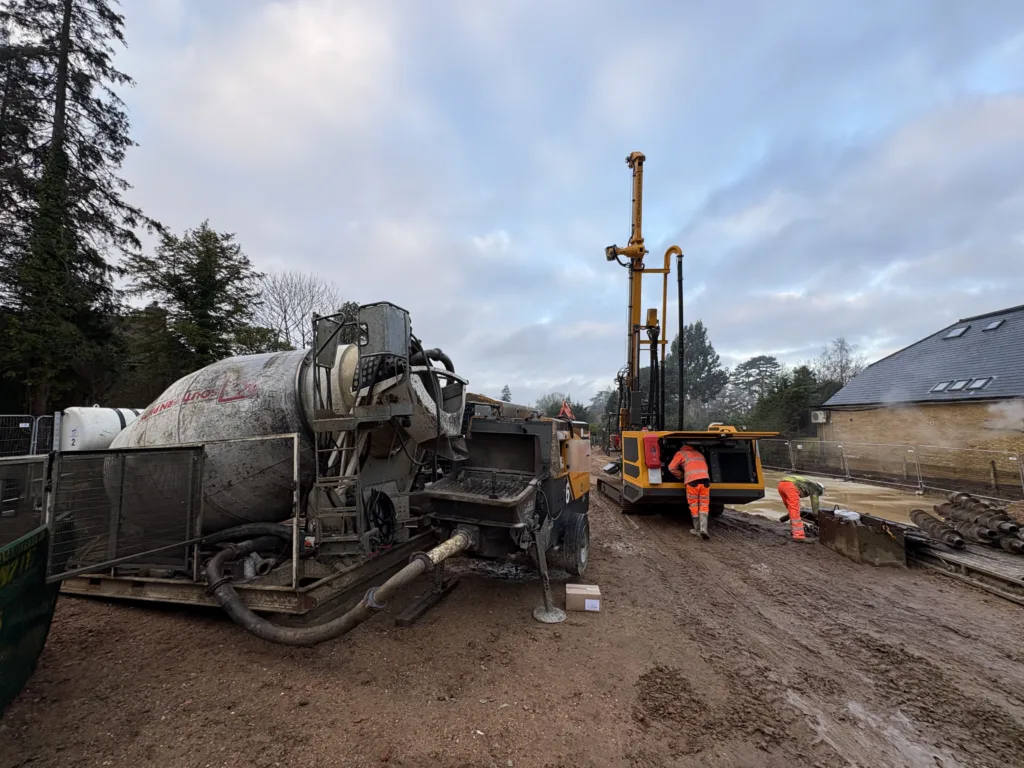
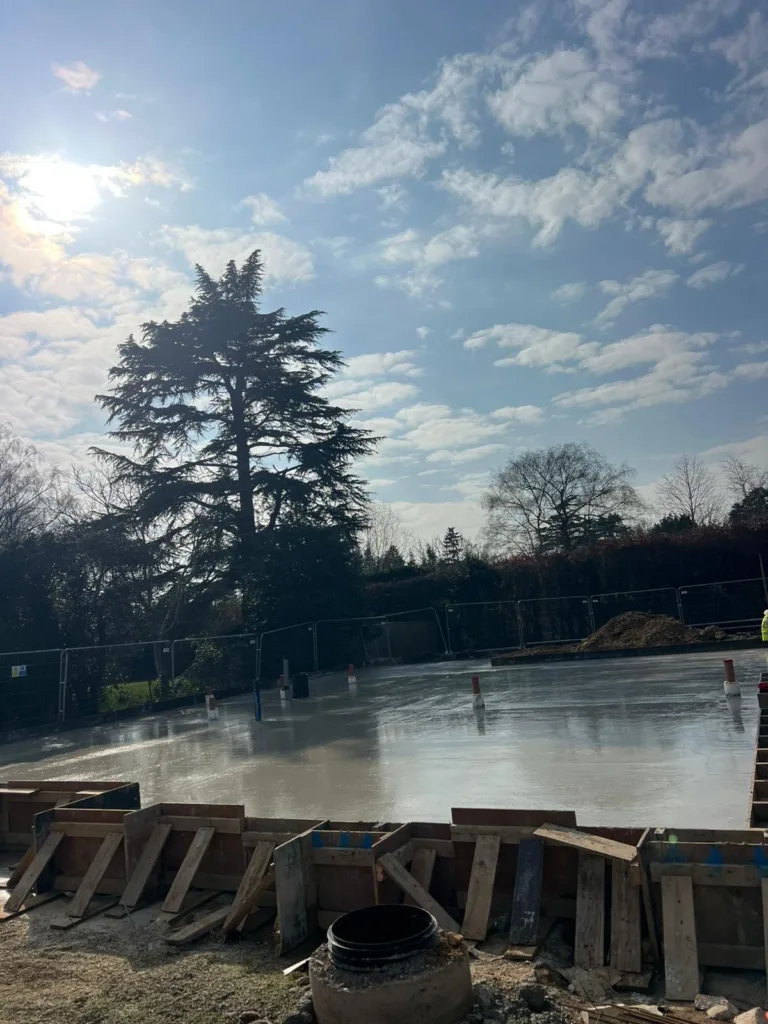
Concrete pour at Fairmile Lane Cobham

Construction

CBR values of greater than 2% across the site allowed SPEEDECK to use a lightweight piling rig, removing the need for an engineered granular piling mat.

The four plots were delivered as a single substructure package, combining piling and raft construction under one scope. SPEEDECK also installed the underslab drainage and services as part of the works.

From the start of piling, just six weeks were allowed to complete and hand back all four plots at structural slab level, ready for the superstructure trades to begin.

By carrying out additional ground investigation and testing, the foundation design was refined to reflect the actual volume change potential of the site, rather than relying on the initial conservative classification.

The resulting voided piled raft provided a technically appropriate and warranty-compliant solution for the tree-constrained site, while allowing the four plots to be delivered efficiently as a complete substructure package. Another example of foundations designed around the ground conditions, not simply designed around the first assessment.

Works were delivered on time and to a good standard.

James Thomson