Updated November 2026
SPEEDECK designs and builds piled raft foundations for later living, extra care, supported living and care home developments across Southern England and the Midlands. These schemes often combine apartment blocks, bungalows and communal buildings with lift pits and steel frames, frequently on previously developed or poor ground. One design and build package covers the ground assessment, design, piling and reinforced concrete raft, so main contractors and housing associations get one programme and one party responsible for the foundation. Recent projects range from a 70-home later living and supported living scheme in Nottingham to care homes and retirement apartments in Hampshire, Kent, Buckinghamshire, Essex and West Sussex.

Building later living homes, retirement communities, assisted living, and care facilities, comes with its own unique challenges. Tight budgets, complex ground conditions, and compressed programmes can all create hurdles for developers and contractors.
At SPEEDECK, our piled raft foundation solutions are designed to make these projects faster, safer, and more cost-effective, without compromising quality or sustainability.
Foundations for Later Living and Care Home Developments
The demand for later living accommodation, including care homes, assisted living schemes and retirement developments, continues to grow across the UK. As the sector expands, so does the need for foundation systems that are cost-effective, sustainable and reliable on challenging ground.
Foundation design plays a critical role in the viability of any later living project. Ground conditions, structural loads and programme pressures all need to be carefully considered at an early stage.
At SPEEDECK, we deliver piled raft foundations specifically suited to care home and retirement construction, helping developers reduce risk, control cost and accelerate delivery.
Check out this great project at Farnborough Road for GEDA, which included foundations for 50 apartments for older people, 14 apartments and six bungalows for supported living.
For a 67-bed care home in Alton, our piled raft for Highwood Group handled dissolution risk, flood levels and radon in eight weeks on site, and our in-house load take-down saved around £30,000.
Common Ground Challenges in Care Home Construction
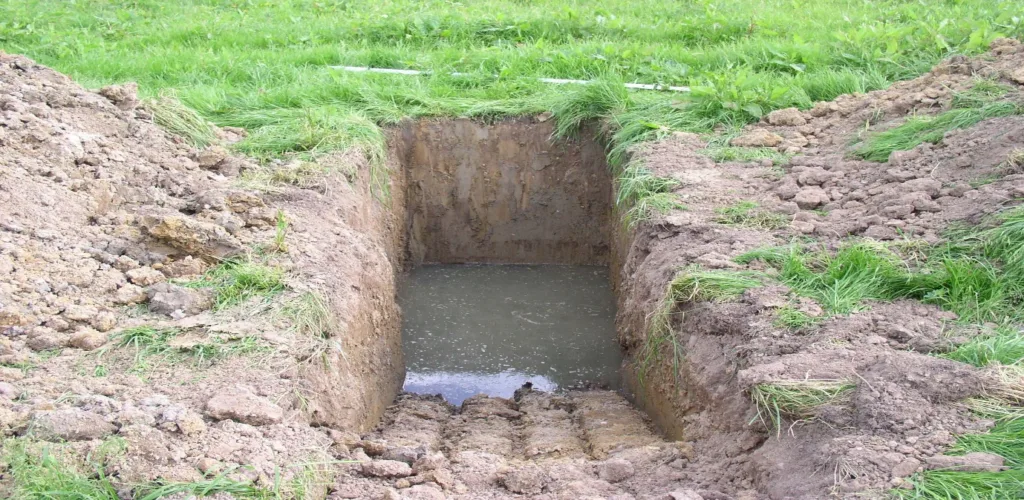
Many later living schemes are built on sites with complex geotechnical conditions. These often include shrinkable clay soils, made ground, high water tables or variable bearing capacity. In regions such as southern and eastern England, clay formations can significantly affect traditional foundation strategies.
For care home developers, this can result in:
High excavation volumes
Increased concrete usage
Extended groundworks programmes
Greater exposure to unforeseen ground risk
Traditional strip or trench fill foundations may be familiar, but they are not always the most efficient solution for multi-unit retirement or assisted living buildings.

Why Piled Raft Foundations Work for Later Living Projects
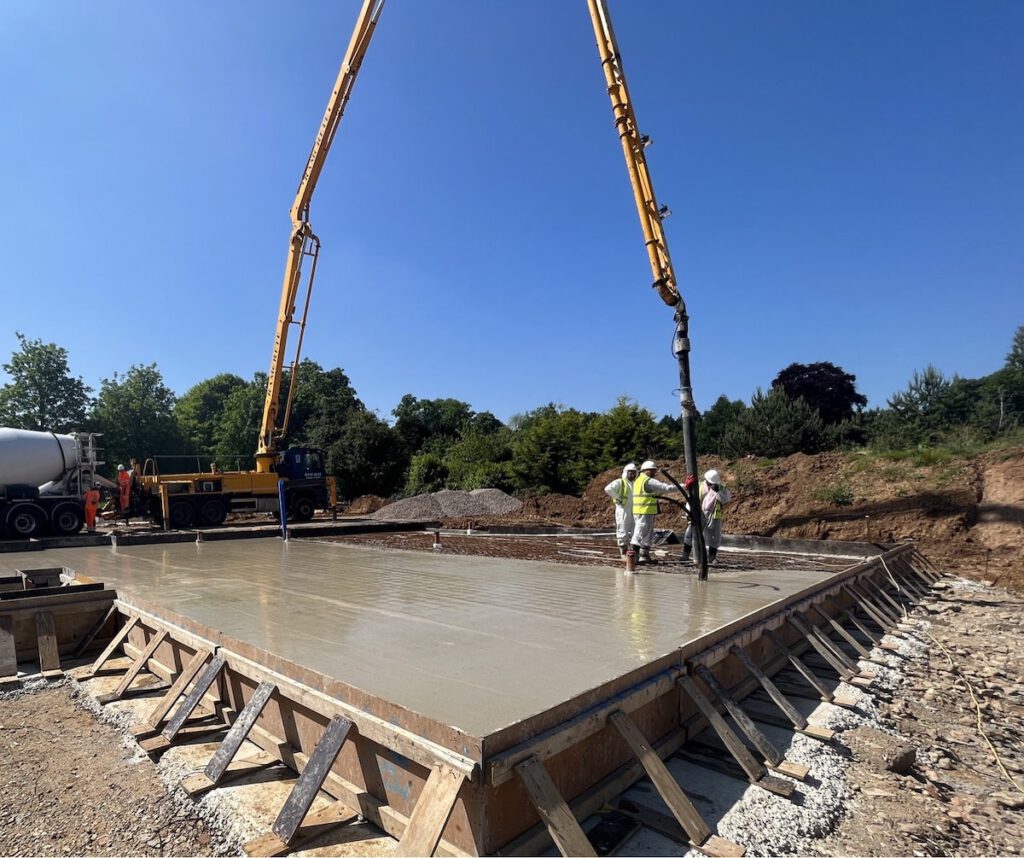
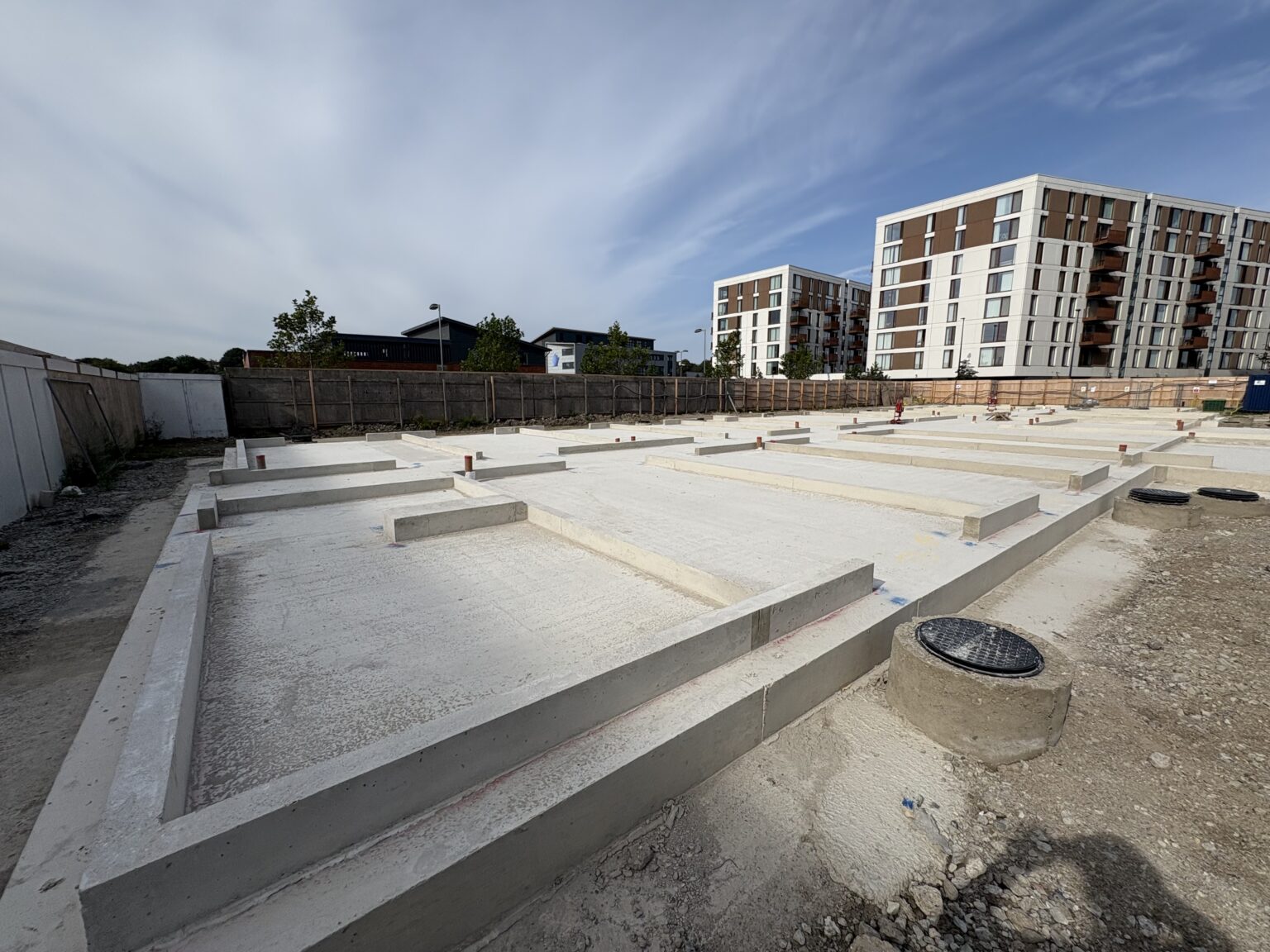
A piled raft foundation combines a reinforced concrete raft slab with strategically positioned piles. Instead of relying solely on shallow bearing capacity, the system distributes structural loads more efficiently across weaker soils.
This approach offers several advantages for later living developments:
Reduced excavation depth
Lower concrete volumes
Faster groundworks programmes
Improved cost certainty
- Reduced pile numbers (At Bairds Farm, a 64-bed dementia care home in West Sussex, we cut pile numbers by 25% compared with the original scheme.)
By optimising both the raft thickness and pile layout, we can often reduce embodied carbon compared to conventional mass concrete solutions, supporting more sustainable care home construction.
All of these advantages were shown at our Eastbourne project over in East Sussex. Watch the timelapse video now to see just how quick our solution works on site.
Later Living Foundations in the Midlands
Many Midlands later living sites are on former industrial land, college or hospital sites and river valleys, where Made Ground, soft alluvium, clay and shallow groundwater are common. Piled rafts suit these sites because the piles carry the buildings below the weak ground while the raft keeps excavation and spoil disposal to a minimum.
At Farnborough Road in Clifton, Nottingham, main contractor GEDA was building 50 later living apartments for older people, 14 supported living apartments, 6 bungalows and a new head office for Nottingham Community Housing Association on a former college site. The tender design used piles, pile caps, ground beams and precast slabs throughout, with significant excavation and disposal costs. SPEEDECK replaced it with partially voided CFA piled rafts of approximately 3,504 m², including two waterproofed lift pits and holding-down bolts for the steel-framed office, and avoided heave precautions on over 50% of the site. The work was completed in 14 weeks.
At Britannia Works in Atherstone, Warwickshire, SPEEDECK is currently delivering piled raft foundations for 70 extra care homes.
What Later Living Schemes Need from a Foundation
- Mixed building types: apartment blocks, bungalows, communal facilities and offices on one site, each with different loads. Rafts can be designed to different thicknesses for each building, as at Farnborough Road (300 mm under the apartments, 225 mm under the bungalows and office).
- Lift pits and steel frames: waterproofed lift pits, holding-down bolts, downstands and slab steps built into the raft design.
- Ground and tree risks: a heave assessment so voidformers are used only where the ground and trees need them.
- Programme certainty: one design and build contract and a fixed programme, which helps main contractors meet funding and handover milestones.
- Warranty approval: designs compliant with NHBC, LABC and Premier Guarantee requirements.
Sustainability and Embodied Carbon in Foundation Design
Sustainability is increasingly central to retirement and care home development. While operational energy performance is often prioritised, embodied carbon in substructure works can represent a significant proportion of a building’s total footprint.
By reducing excavation depth and limiting excess concrete, piled raft foundations can significantly lower embodied carbon compared to traditional mass concrete solutions. Fewer lorry movements and shorter groundworks programmes further contribute to a more responsible construction process. This contributes to:
Lower embodied carbon
Reduced site disruption
More efficient construction sequencing
For developers working towards ESG objectives, early-stage foundation design can deliver measurable environmental benefits.

Early Engagement Reduces Risk
Foundation efficiency is strongest when addressed early in the design process. By reviewing ground investigation data, structural loads and site constraints at concept stage, alternative foundation solutions can be assessed before costs are fixed. Bannister Road in Southampton engaged us early in the process for a complete solution.
Our approach focuses on practical, buildable engineering that supports programme certainty and commercial viability. As demand for later living accommodation continues to grow across the UK, foundation strategies must evolve to meet commercial, environmental and technical pressures. Piled raft foundations provide a practical, cost-effective and sustainable solution for care home and retirement developments built on challenging ground. Wendover Manor Care Home is another example of our work in the care sector.
Later Living and Care Home Projects
- Farnborough Road, Clifton, Nottingham: 70 later living and supported living homes plus NCHA’s head office, approximately 3,504 m² of piled rafts, completed in 14 weeks.
- Alton Care Home, East Hampshire: 67-bed care home for Highwood Group. A 1,438 m² reinforced raft on CFA piles, designed for dissolution features, with a waterproof lift pit, under-slab radon venting and a 1.2 m ground raise for flood mitigation. Testing showed the clay was non-plastic, so no heave precautions were needed, and SPEEDECK’s in-house load take-down saved the client £30,000. Handed back in 8 weeks.
- Chatham Waters Care Home, Chatham, Kent: multi-storey steel-framed care home for Apex Contractors on a constrained urban site. A 1,211 m², 300 mm raft on 350 mm CFA piles 12.0 m to 20.5 m long, with lift pits and movement joints, delivered as one substructure package.
- Wendover Manor Care Home, Wendover, Buckinghamshire: care home and support building for Life Build Solutions. Four giant sequoias put the whole footprint inside a 50 m tree zone of influence, on clay over contaminated Made Ground with groundwater from 1.5 m. A 1,318 m² voided CFA piled raft on 201 piles, with two lift pits, avoided the 2 m deep shallow foundations first suggested and was completed in 9 weeks.
- Nazareth House, Southend-on-Sea, Essex: two later living apartment blocks for McCarthy Stone, replacing a former care home. A 3,456 m² piled raft replaced the original piled scheme, with an old basement removed, three lift pits and heave protection only where tree influence and desiccated clay needed it.
- Doves, Bannister Road, Southampton: later living apartment block for McCarthy Stone. A raft with a thinner than typical slab, drainage encased within the slab and a waterproof lift pit; a heave assessment agreed with the warranty provider removed the need for heave precautions. The first slab was handed over in 5 weeks and the whole slab in 12.
- Bairds Farm, Climping, West Sussex: 64-bed dementia care home for Highwood Group. A CFA piled raft with 25% fewer piles than the original engineer’s scheme, built above high groundwater without dewatering, with an overslab gas membrane instead of under-slab ventilation and no heave precautions. Completed in 9 weeks.
Planning a Later Living or Care Home Development?
If you are designing a retirement development, assisted living scheme or care facility on challenging ground, reviewing foundation strategy early can unlock significant cost and programme savings.
Explore our foundation solutions or speak to our team to understand how piled raft systems can support your next later living project
Frequently Asked Questions
Who can design and build foundations for a later living scheme in the Midlands?
SPEEDECK designs and builds piled raft foundations for later living, extra care and supported living schemes across the Midlands and Southern England, including Farnborough Road in Nottingham for GEDA and NCHA. Our in-house geotechnical and structural engineers design what our own crews install, under one contract.
What is the best foundation for a care home on poor ground?
Where the ground is weak, variable or affected by trees, a piled raft is often the most practical choice. Piles carry the building to firmer ground, while the raft forms the ground floor and can include lift pits, downstands and slab steps, with less excavation than piles and ground beams.
Can a piled raft include lift pits and steel frame fixings?
Yes. Waterproofed lift pits, holding-down bolts for steel columns, downstands and slab steps can all be built into the raft, as at Farnborough Road in Nottingham.
Do later living developments need heave protection?
Only where clay soils and trees create a heave risk. A heave assessment shows where voidformers are needed, which can avoid them across much of a site. At Farnborough Road, heave precautions were avoided on over 50% of the site.
How long do later living foundations take?
It depends on the size of the scheme. Recent examples: Alton Care Home (67 beds) in 8 weeks, Wendover Manor and Bairds Farm care homes in 9 weeks each, and Farnborough Road, with 70 homes and an office building, in 14 weeks.