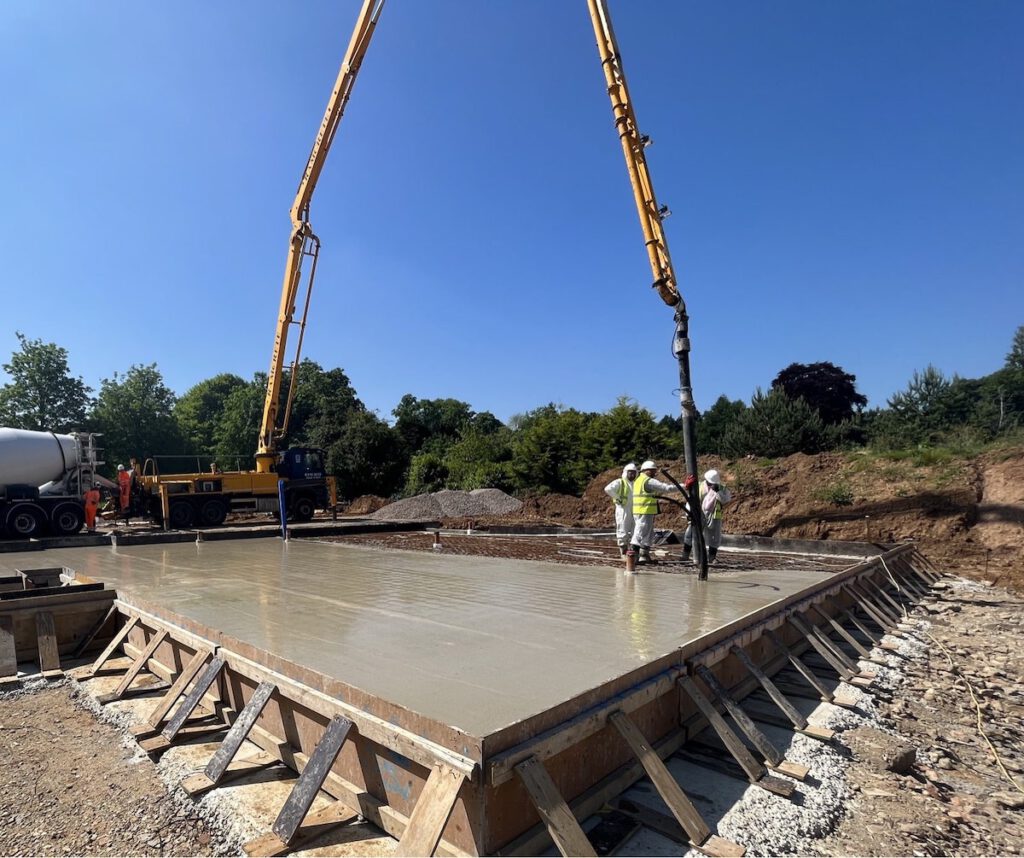
Following a review of the structural design information and site constraints, we recommended a CFA piled reinforced concrete raft foundation system for both the care home and the support building. This integrated approach combines piling and the structural raft slab as part of the substructure works, providing a stable structural platform capable of distributing loads efficiently into the underlying ground conditions. By adopting a piled raft solution, the design reduces the complexity associated with traditional pile-and-beam arrangements and allows the outer skin of brickwork and internal structural elements to be supported directly by the reinforced slab. This approach simplifies construction sequencing while maintaining reliability and long-term structural performance.


Concept Design


Design Engineering
The engineered foundation system incorporates a 300 mm reinforced concrete piled raft slab, selected to provide the stiffness required to support the building loads and structural frame elements, with the inclusion of a waterproof lift pit. To address potential ground movement risks, 160 mm voidformers were incorporated beneath the slab where required, ensuring appropriate heave protection within the substructure design. The engineering approach utilised structural loading information and our design methodology to establish an efficient pile layout capable of safely transferring loads to the bearing strata. The foundation system achieves a maximum safe working load of approximately 400 kN, with pile lengths varying across the development to suit the site’s ground conditions. The scheme provides a continuous structural base with a total raft slab area of approximately 1,318 m², forming a durable foundation platform for wendover care home and support building.


Construction
The substructure works were designed to enable a coordinated construction sequence combining piling and raft slab installation. Delivering these elements as a single integrated package simplified site logistics, on a site where working space was at a premium and reduced interface risks between trades. This approach enabled efficient installation of the lift pit, along with drainage and services beneath the slab while providing a consistent and stable working platform for the superstructure construction.