Understanding Clay Soils in the Region
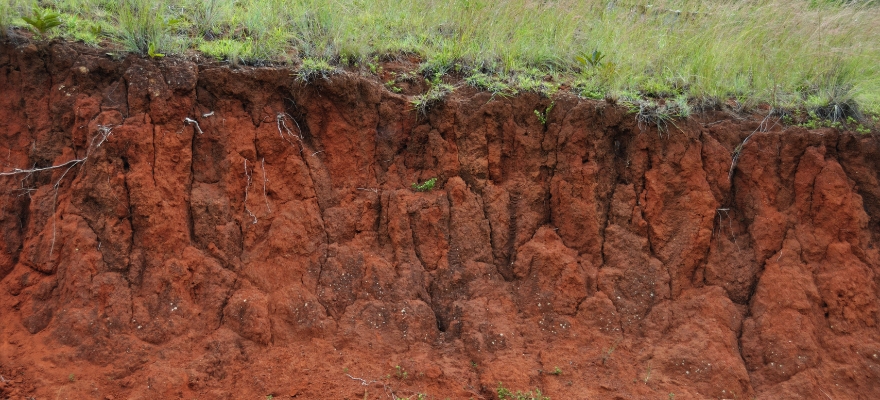
Clay soils are widespread across southern and south-eastern England, forming a significant engineering challenge for construction projects. The most well-known of these is the London Clay Formation, a thick, fine-grained sediment that underlies much of Greater London, Essex, Kent, and extends into parts of Surrey, West Sussex and Hampshire. This clay is notorious for its susceptibility to moisture changes, expanding when wet and shrinking when dry, which can cause ground movement and structural issues if not properly managed in foundation design.
Other clay deposits also occur from the Weald through to more recent superficial clays such as clay-with-flints and glacial deposits across southern England, adding to the variability and engineering complexity of subsoils outside major urban centres.
Clay’s shrink-swell behaviour is a common cause of differential settlement and subsidence, especially under shallow foundations that cannot adapt to seasonal volume changes. These challenges are particularly pronounced in densely populated zones of London and the wider Southeast, where infrastructure and buildings are frequently affected by soil movement. (Groundsure)
Why Clay Soils are Challenging for Foundations
Clay soils typically show:
- High moisture sensitivity: significant volume change with seasonal wet/dry cycles. (British Geological Survey)
- Variable behaviour across short distances: local geology, weathering, trees, drainage, history and groundwater all influence soil response. (structurescentre.com)
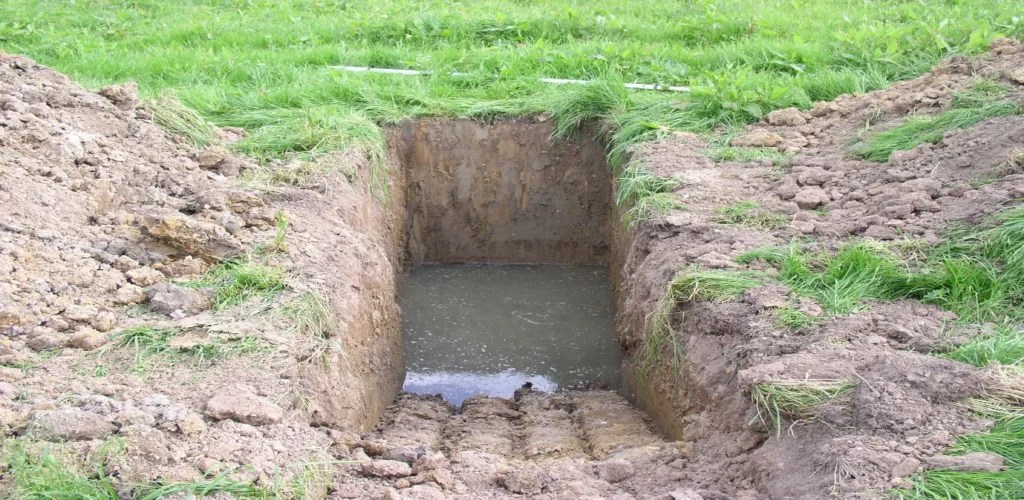
Traditional shallow strip or trench-fill foundations can be affected over time by the movement of clay. Tree action in particular can cause significant issues. As trees take up moisture from the soil, they can cause desiccation and shrinkage. Similarly, when removed, the soil around the root zone will re-saturate, causing heave. Both of these are a problem for shallow foundations, leading to differential movement and structural damage. Frost heave is also relevant to clay soils, further information can be found here.

Piled Raft Foundations: A Strong Solution for Clay
What Is a Piled Raft Foundation?
A piled raft foundation combines two systems:
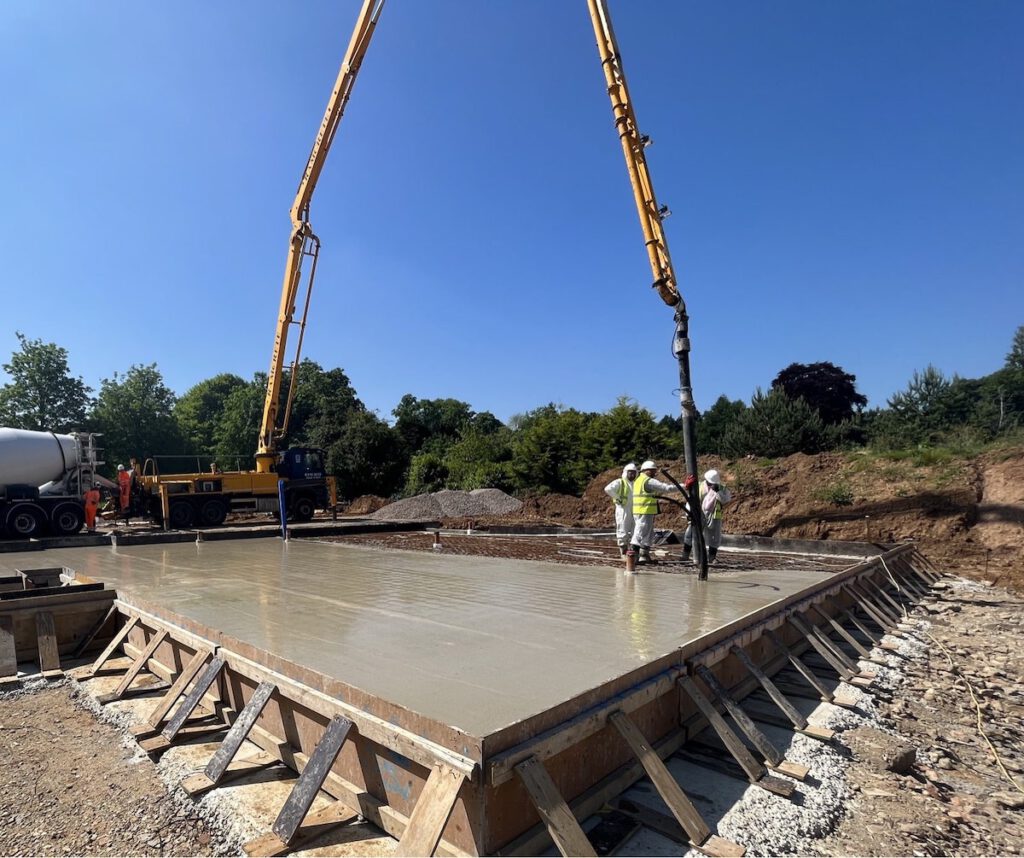
- A large reinforced concrete slab covering the structure’s footprint, spreading the load evenly;
- A series of piles, vertical elements driven or bored into deeper, stronger soil layers beneath the weak clay.
The raft and piles work together: the raft distributes loads across a broad area, and the piles bypass the weak upper clays to transfer load to firmer strata below.
Why a Piled Raft Works Well on Clay Soil
- Handles Weak Surface Soils Efficiently
Where the top strata are weak or soft, as is common in clay-rich sites, a piled raft transfers significant loads deeper while still using the raft to share forces evenly, improving overall stability compared to shallow or standalone pile systems. - Adaptable and Cost-Effective
Because the raft distributes loads efficiently, fewer piles may be needed than with a pile-only solution. This often reduces material, installation time, and costs while maintaining performance. - Durable in Variable Moisture Conditions
By locating critical load support below the clay’s active moisture zone, piled rafts mitigate the impacts of seasonal shrink-swell cycles that typically plague shallow foundations on clay.
Typical Regional Applications
In London and the South-East, where London Clay underlies much development and is known for substantial shrink-swell behaviour, piled raft foundations provide a practical way to deliver stable support for both residential and commercial structures.
Across parts of Surrey, Kent, Hampshire and Essex, where similar clays occur near the surface or beneath shallow deposits, piled raft systems are frequently used for residential and commercial construction for their adaptability and resilience to ground movement. (Groundsure)

Conclusion
Clay soils in southern England, especially around London and the Southeast, pose significant challenges due to their low bearing capacity and moisture-dependent movement. Piled raft foundations provide a robust, adaptable, and efficient solution by combining deep support with wide-area load distribution, safeguarding structures against differential settlement and movement associated with shrink-swell clays.
Where clay is extensive, modern piled raft systems help ensure structural durability and performance while offering cost and construction advantages over more traditional deep foundation approaches.