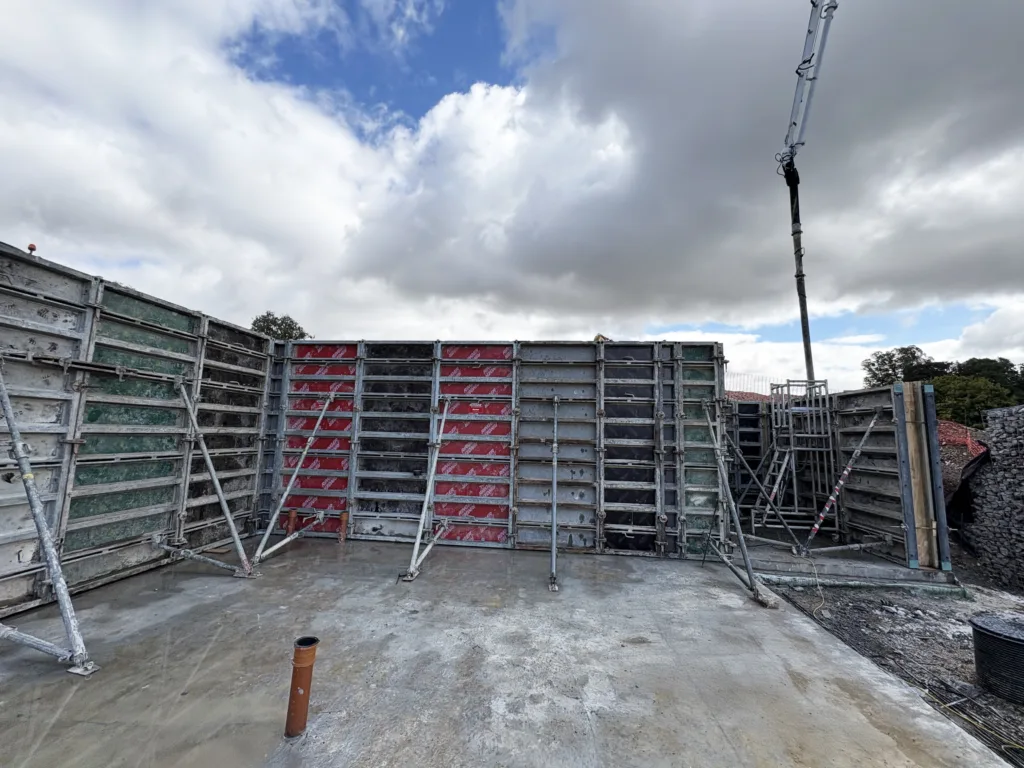
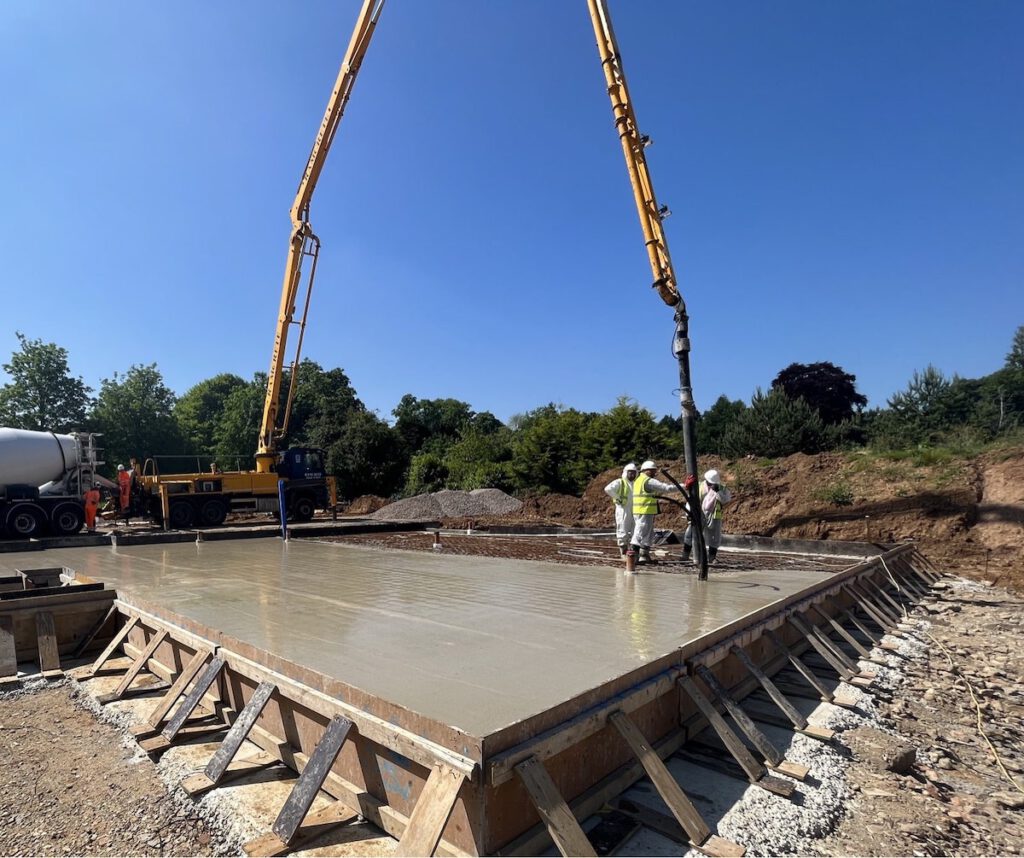
Following review of the proposed development layout and geotechnical conditions, we recommended a CFA piled reinforced concrete raft foundation system incorporating reinforced concrete retaining walls up to 3 metres in height for both residential plots and associated garages.
This integrated approach combined piling, retaining structures and reinforced raft construction into a coordinated substructure package. By transferring building loads through piles into suitable bearing strata while creating stable terrace platforms across the site, the system provided a practical alternative to traditional foundation methods.
Compared with conventional pile-and-ground-beam construction, the piled raft solution simplified sequencing, reduced excavation requirements and minimised muck away, resulting in a more efficient construction programme.
Site investigations identified highly variable topsoil across the development, consisting predominantly of organic gravelly silt. Beneath the topsoil, Head Deposits were encountered, comprising firm to very stiff gravelly clay, silty gravel and slightly sandy gravelly silt. These materials overlay the Seaford Chalk Formation, consisting primarily of stiff, slightly gravelly silty chalk.
The variability of the near-surface strata, combined with the significant site level changes, reinforced the need for a foundation solution capable of transferring structural loads reliably into competent bearing strata while minimising construction risk.